America’s Healing and Progress Amid Political Divides
- Articles
republipeclr
- 0
- 15 minutes read

America’s Healing and Progress Amid Political Divides
By Republican People of Color
Introduction
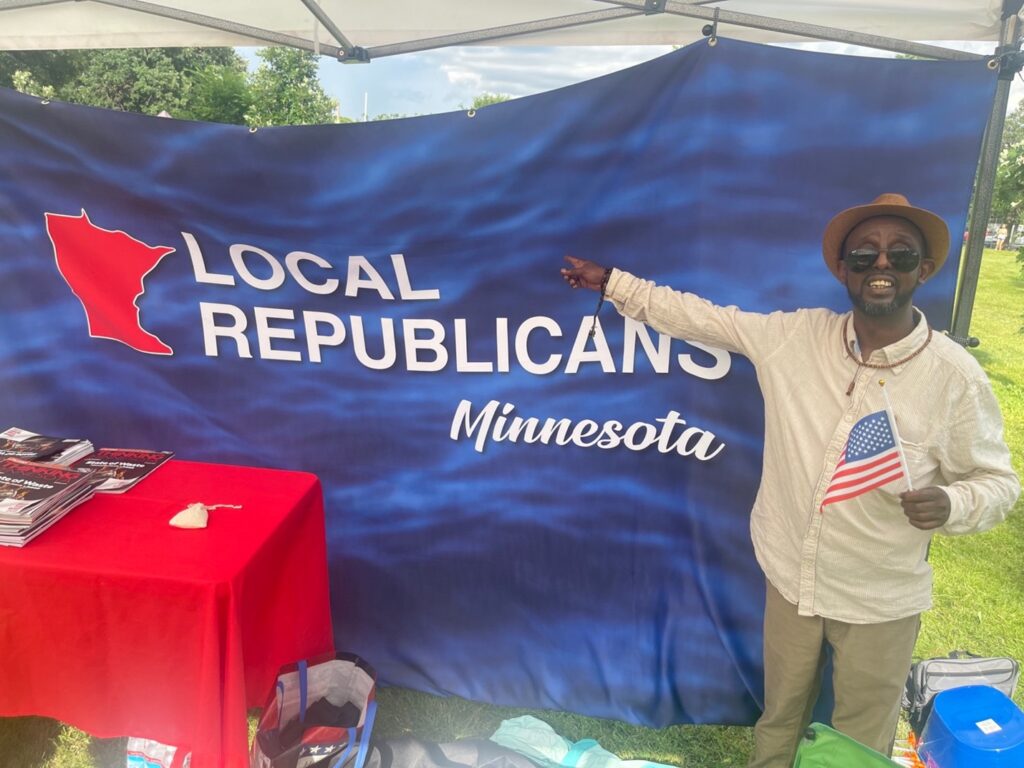
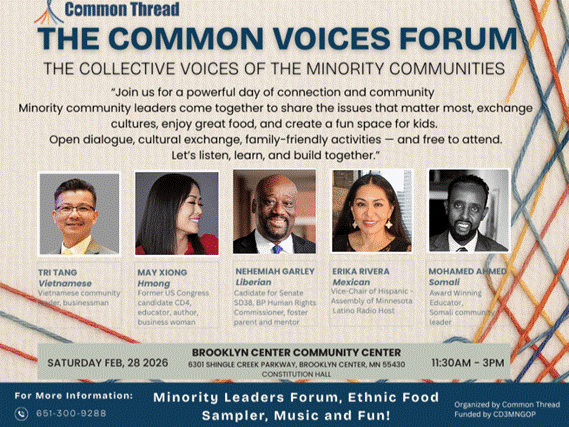
America is facing serious political divisions, but there are also signs of progress and healing. The country’s story is shaped by both its difficulties and its perseverance, as people and leaders from all backgrounds work to close gaps and sometimes feel like they are shouting in a desert, hoping their efforts to build a more optimistic future will be heard. For example, in small towns and big cities alike, local officials from different parties have come together to tackle issues like public safety or education, showing that these moments of bipartisan collaboration can break through the noise. These real-life examples remind us that healing is possible when people work side by side, even if it sometimes feels like progress echoes unheard. Like the author, Mohamed Ahmed, shouting for Freedom, liberties and rights may as well be shouting in the desert. But as Free people Power means shout we must.
Challenges and Relief in Current Times
The past few years have been challenging for Americans. Scandals, misinformation, and foreign interference have escalated tensions and distrust in politics. Still, there have been some positive changes, such as a steadier economy, improved public safety, and greater civic involvement. For instance, the U.S. inflation rate dropped from 2.95% in 2024 to 2.4% by early 2026, making it the lowest rate seen in recent years. This measurable progress helps validate claims of economic improvement and can address doubts among those looking for concrete proof of change. Each administration, including President Trump’s, spotlights its successes, but people remain careful and look for proof from sources they trust and their own experiences.
Political divisions are more than just about policy differences. Strong emotions and media focus on extreme views make things worse. But before we get caught up in all the labels and headlines, think about what keeps you up at night—what do you worry about most when it comes to the country’s future? Chances are, most Americans have similar worries about how government works, economic chances, and fairness. When we recognize these shared concerns, we can begin to build bridges and help the country heal, even if disagreements continue.
Issues Campaigned by Republican People of Color
Republican People of color have become part of an orchestra of voices across America, focusing their efforts on bread-and-butter issues: the economy, education, crime, drug overdose, and others. The economy, in particular, resonates as the most immediate problem, reflecting voters’ actual experiences across demographic lines. Money is personal to most of us, proudly capitalist Americans.
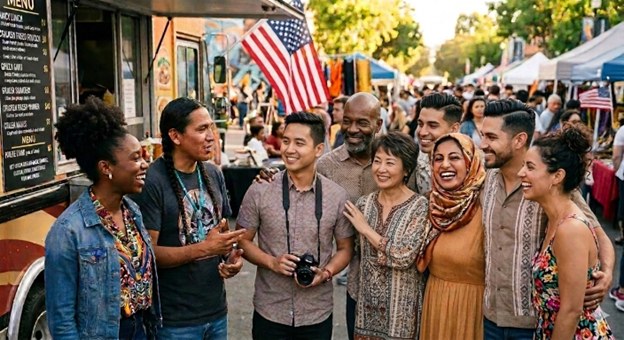
In recent elections, Republican people of color have used their distinctive experiences to tackle big challenges, idealizing them in messaging, works, and outreach to win over minds to our efforts. Our Republican People of Color campaigns focus on practical solutions such as creating jobs, promoting free trade, improving schools, making communities safer, and embracing peace through strength, with a focus on America’s foreign policy goals. A big part of our progress comes from how we reach out to communities. Some of the most effective methods we’ve used include hosting town halls and listening sessions, so people have their voices heard directly, using social media to engage younger voters and share real stories, building coalitions with local organizations and churches, and partnering with other community leaders on bipartisan projects. This direct, personal approach helps build trust while making our ideas more accessible and relevant. By attending to these issues and reaching out in ways that matter to people, we try and hopefully succeed in our efforts, but above all, we strive to be a voice that helps connect the Republican party’s goals with what communities need and to encourage more transparent conversations. Let people of color have a seat at the table, not just on the menu of political things.
Economic Concerns
Inflation has been a steady concern. In 2024, the U.S. inflation rate was 2.95%, dropping to 2.4% by early 2026. That might sound reassuring as a statistic, but for most Americans, the difference shows up at the grocery store or with every monthly bill. For example, even with the lower rate, a family of four may now spend an extra $15 to $20 more on a single trip to the grocery store compared to two years ago. (Grocery Spending Statistics 2026: Average Bills, Food Prices, and Shopping Trends, 2026) The price of everyday items like eggs, bread, and milk has gone up, leaving working- and middle-class families struggling to pay for basics, and even people earning over $100,000 feeling that their money doesn’t go as far as it used to. (Inflation measure falls to nearly five-year low as gas prices fall and housing costs cool, 2026) Higher costs for housing, education, and healthcare have forced many to use their savings, making it hard to believe that having less can make them happier. (Whitney, 2026) We don’t want to own less and be happy.
Some economic policies, especially those from the left, have left certain families with less money, causing debates about how well government programs work. For example, the expanded Child Tax Credit program increased direct payments but phased out quickly as income rose, creating a situation where some working-class families lost out on benefits if they earned slightly more. Additionally, rising payroll taxes to fund expanded public programs like Medicaid or paid family leave have reduced take-home pay for many households. The cost of these policies, combined with inflation, means that some families find government help does not always outweigh what they lose in higher taxes and prices. The gap between the wealthy and those struggling keeps growing, underscoring the need for reforms that make life more affordable and give people more opportunities. (Cox, 2025)
Republican leaders have put forward several policy solutions to make life more affordable and expand opportunities for families. These include lowering income and payroll taxes, expanding the standard deduction for middle- and working-class families, supporting school choice programs, promoting job growth through deregulation and small-business incentives, and backing reforms to healthcare that increase price transparency and expand options for private coverage. There is also support for targeted tax credits to help with childcare and higher education costs, without creating new burdens for American families. By focusing on these reforms, Republicans seek to help more people keep what they earn and have greater control over their own paths to success.
Recent Economic Developments
The stock market has hit record highs, helping investors and signaling confidence in the economy. Still, many Americans worry about the cost of living and job security. At the same time that indices like the S&P 500 and Dow Jones reach new peaks, median household wages have remained largely flat when adjusted for inflation. (The Purchasing Power of Household Incomes: Worker Outcomes Through July 2024 by Income and Race, n.d.) This growing gap highlights why some people feel left behind by national economic headlines: while investors profit from surging stocks, many working families see little or no improvement in their own paychecks. More jobs are now in the private sector, while government jobs have decreased. President Trump’s administration placed all federal purchasing under the General Services Administration to cut waste and inefficiency, a move praised for saving taxpayer money.
In the past, government jobs helped many people, especially people of color and working-class white Americans, join the middle class. Now, things are changing. The private sector is growing and creating new jobs, but these often require people to learn new competencies and adjust more quickly. Recognizing these challenges, many Republican-led initiatives and community programs have stepped up to empower people of color with new skills for today’s workforce. There are expanded workforce development centers, apprenticeship programs with local businesses, and scholarships for technical training tailored to fast-growing industries like tech, health care, and advanced manufacturing. By focusing on upskilling and providing hands-on learning opportunities, these efforts help open doors to private-sector careers and offer families practical hope for upward mobility.
Regulation and Infrastructure
Heavy regulations have slowed progress in key industries such as shipbuilding, highways, and railways. For example, in major infrastructure sectors, it can now take an average of 18 to 24 months to get federal permit approval for a new highway or rail project. This adds not only months but sometimes even years to a project’s timeline, making it harder to launch anything beyond basic repairs. Most infrastructure work now focuses on repairs rather than new projects, mainly because of higher costs and excessive paperwork. (Truslow, 2025) The Trump administration tried to cut down on regulations and speed up energy and building projects, similar to what countries like China do to be more efficient.
According to AP News, Alabama has introduced the CHOOSE Act, which allows eligible families to use state funds for private school tuition, homeschooling, and other educational expenses starting in the 2025-2026 school year, giving local leaders and families more control over education decisions. This shift is meant to help fix ongoing problems, like those faced by children of color in Minnesota and poor white children across the country. Local control and putting the destiny of our kids’ education in the hands of parents—not just bureaucrats in far-off capitals—is a gamechanger in educating our kids for the modern world. As one parent from St. Paul, Minnesota, put it, “Picking the right school for my son changed his life. I finally felt like my voice mattered,” showing how school choice turns a policy concept into a real, personal victory for families. Parents know their kids better than bureaucrats do. That is common sense regarding our kids in the education arena.
Crime and Drug Overdose Epidemic
Crime and the opioid crisis have been big problems. Recent numbers show a big drop in violent crime, with the lowest murder rates in 22 years during Trump’s first year. The opioid crisis, which took over 110,000 lives, saw a 27% drop in overdose deaths in 2024, the largest single-year decrease ever. According to a Justice Department press release, federal agencies have recently intensified their actions against gangs and cartels, exemplified by indictments of over 70 individuals connected to the violent Tren de Aragua organization. Despite these efforts, experts continue to describe the crisis as complex. New dangers from synthetic drugs and illegal supply chains are appearing. Staying alert and finding new ways to prevent drug abuse are needed to keep making progress.
Political Splits and Common Ground
As Republican People of color, we are proud to have voted for the Republican candidates and admit that these issues go beyond party politics. Political divisions are getting worse, powered by strong feelings and personal biases. Many people do not see mistakes in their own groups, which keeps the cycle of division going. What is one thing your own side or group could have done better, or might do differently in the future? By asking ourselves questions like this, we can begin to see each other with more understanding and create more honest and productive conversations. We have found that one of the most effective ways to begin building bridges is to hold listening sessions and community forums where individuals from different backgrounds can share their perspectives without judgment. By actively listening and inviting honest feedback, activists can create safe spaces for respectful dialogue. Organizing panel discussions, neighborhood meetups, and joint service projects are other practical approaches that help bring people together, encourage cooperation, and remind everyone that, despite disagreements, our shared concerns matter more than the labels we wear.
Still, there is common ground. Most Americans want a good life, affordable living, good schools, and safer neighborhoods. These joint goals can help the country heal, as long as officials and citizens are willing to talk respectfully and find real solutions.
The State of America’s Healing
America is making progress in important areas, but divisions remain. Healing takes communities with clear goals and people working together on shared interests. That requires lots of work and time. Experts say that understanding one another and having respectful conversations are key to moving forward. A recent article by Curl and Rocheleau examines how voters’ perceptions during the 2024 presidential election were shaped by affective polarization and psychological biases, suggesting that many people find it difficult to set aside strong party loyalty and instead focus on practical solutions that benefit everyone. We are all partisans and biased, most of us either by Trump Derangement Syndrome or cultish followers of the administration.
Conclusion
Despite ongoing disagreements, we are of the camp that agrees to disagree on most politics. According to AP News, the United States saw a significant achievement in 2024 as overdose deaths dropped by 27 percent from the previous year, representing the largest one-year decline ever recorded by the CDC. America is improving in keyways, but there are still challenges. Moving forward must require everyone working together, with a focus on affordable housing, quality education, and safer neighborhoods. For Republican People of Color, this shows the idea of Free People’s Power, which means assisting communities in getting real results.
To those who disagree with these premises, we too agree to disagree with you. That does not make you my enemy, but rather makes us ideological opposites, and we should compete out here in Free People’s Power. We are proudly Republicans and we will advocate for the party goals of bread-and-butter issues as supporters of Trump Administration who we helped elect. We are curious what the second year of administration brings us forward in bread-and-butter issues we care about as Republican People of Color.
Slickcharts.com. https://www.slickcharts.com/inflation
- Stephens, H. & Perry, A. M. (2025). Brookings Institution. https://www.brookings.edu/articles/in-every-corner-of-the-country-the-middle-class-struggles-with-affordability/
- Associated Press. https://apnews.com/article/d489cfa4b48e32232f136830333d1db0
- The Guardian. https://www.theguardian.com/p/x433hc
- The White House. https://www.whitehouse.gov/articles/2025/12/private-sector-job-growth-fuels-president-trumps-economy/
- Federal Reserve Bank of Richmond. https://www.richmondfed.org/publications/research/economic_brief/2025/eb_25-31
- TD World. https://www.tdworld.com/overhead-transmission/article/20967446/power-and-utility-megaprojects-run-35-over-budget-on-average
- CDC Pressroom. https://www.cdc.gov/nchs/pressroom/releases/20250514.html