
Between War and Peace: The American Perspective
- Articles
republipeclr
- 0
- 22 minutes read

Between War and Peace: The American Perspective
What To Do Between War and Peace
The Value of Peace in American Life
by Republican People of Color.
Peace is more than just a word; it is the sturdy beams of our national house, holding up everything we cherish as Americans. Our country rests on these beams: freedom, fairness, and the hope of a better future for our families. Like the framework of a home, these values support and protect us, shaping both who we are and what we strive to become. We believe in using our freedom and strength to help others, and we want less violence in our neighborhoods, our country, and around the world. War tears at these beams, causing pain and destruction, shaking the structure that holds us together. That is why most people want to avoid it: to keep our national house standing strong for everyone who calls it home.
America at War Again
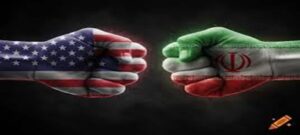
Today, America is at war again, this time with Iran. According to official statements from the U.S. government, the core objectives of the conflict are to prevent Iran from obtaining nuclear weapons, to contain Iran’s influence and destabilizing activities in the region, and to uphold the security of key allies, especially Israel. The administration has communicated a strategy focused on targeted military action against Iran’s nuclear and military capabilities, economic sanctions to weaken Iran’s ability to finance conflict, and robust diplomatic efforts with regional and international partners to build a unified response. These objectives aim to safeguard American interests by reducing threats to global energy supplies and maintaining the credibility of American security commitments worldwide.
But what exactly is at stake for Americans back home? For one, a conflict with Iran threatens to disrupt vital shipping lanes in the Persian Gulf, where a huge share of the world’s oil passes through narrow waters. Any blockage could raise gas prices here at home and affect the global economy. (How Iran attack could shake energy markets and prices, 2026) At the same time, America’s credibility with our longstanding allies is also on the line. If we do not stand by Israel and our other partners now, it could weaken alliances that help deter future threats. We are working with allies like Israel, some Arab countries, European countries, and African partners. The balance of power in the world is changing. (Lind, 2024) News reports point out that this conflict is happening during Ramadan, the holiest month for Muslims, and once again, we are fighting a Muslim country far from home. (U.S. and Israel begin “major combat operations” in Iran, 2026)
Many people have raised different concerns about this war. Some think it distracts from other important issues, like the Epstein case, or believe it mainly benefits Israel. (A new Gallup poll shows how Americans’ sympathies have shifted in the Israeli-Palestinian conflict, 2026) There are also those who mention unverified plots and conspiracy theories, such as claims that the conflict is part of a broader plan to destabilize several Muslim-majority countries, as General Wesley Clark once mentioned. (US ‘plans to attack seven Muslim states’, 2003) It is important to recognize that while some views are based on speculation, others offer thoughtful, evidence-based critiques about regional instability and shifting alliances shaped by this conflict. People around the world, including Muslims, communities of color, and left-leaning groups, share legitimate worries and ask serious questions about the impact of American involvement. (Global Publics View the United States, 2002) By respectfully acknowledging these diverse viewpoints and the legitimacy of fact-based concerns, we can foster unity and encourage open, constructive debate.
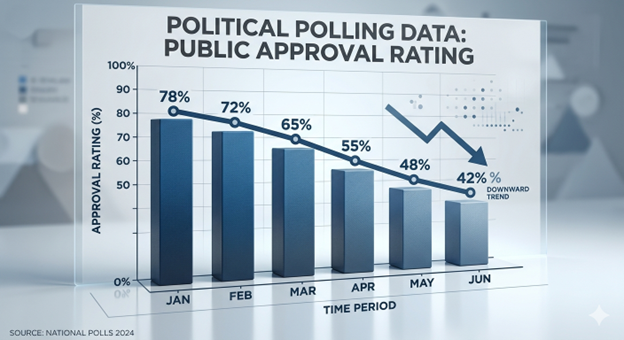
According to a recent report from the Chicago Council on Global Affairs, while a majority of Americans oppose sending US troops to defend Israel if it is attacked by Iran, about 42 percent of the public would support such military action. Supporters say that standing with our allies and acting firmly now could prevent future threats. (Carter, 2016) One camp warns that war will only breed more instability and hostility, while another insists that decisive strength is the surest way to peace. (Fox et al., 2024)
The wars in Iraq and Afghanistan had mixed results. A recent Pew Research Center report examines American support for various forms of foreign aid. Still, it does not provide exact numbers regarding public support for military intervention in this new conflict. (YouGov poll: Majority do not want military action against Iran, but a majority think it’s likely, 2026). Yet, despite this lack of public approval, we are still involved. According to Human Rights Activists in Iran (HRANA), by June 28, 2025, Israeli strikes during the Iran-Israel war had killed 1,190 people and wounded over 4,000, including hundreds of civilians and military personnel. The conflict has also featured ongoing battles between Iran and American-led allies, with bombs, missiles, and drones striking cities from Tehran to Tel Aviv. America has a strong military presence in the region, and our soldiers are deployed again, now under the Department of Defense, which has been renamed the Department of War for Operation FURY. (Fact Sheet: President Donald J. Trump Restores the United States Department of War, 2025)
The Role of the Citizen and Government in Wartime
Individual Americans do not decide to go to war; that decision is made by the government for moral, strategic, or security reasons. Earlier, we discussed “Peace through Strength.” You will find an article on this site and the hard choices our country faces in a world of many strong nations.
Still, the difference between what people want and what leaders decide can feel big. Picture a town-hall meeting in a small American community. On a chilly evening, neighbors pack the local rec center, and a mother rises to speak: “My son is set to deploy next month. Why are we being sent to another war so far away? What does this mean for our families back home?” The room grows quiet as a local official clears his throat, pausing before replying, “We hear your concerns, and I promise to relay them to our representatives in Washington. But ultimately, the decision comes from higher up, and we must trust in our leaders’ judgment for the country’s safety.” In the back stands a service member, quietly listening, their sense of duty shaped by choices made far above their rank. This brief exchange captures the distance between citizens’ hopes and worries and the government’s power to act for the nation.
Our Responsibility as Free People
No matter your view on the war, the reality is that America is at war. Our soldiers come from all parts of society: citizens by birth and by choice, immigrants, neighbors, friends, and coworkers. In a unit overseas, you might see a mechanic from the Bronx working with a nurse from rural Oklahoma and a translator from Minnesota who just became a citizen. At home, whole towns support their deployed neighbors. Local schools organize care package drives, a church holds a potluck fundraiser for a reservist’s family, and students write letters to troops they have never met.
If you are moved by these acts of support, there are ways you can make a difference in your own community. Consider starting or joining a care package drive, organizing a meal train for a military family, or volunteering with local groups that aid service members and their loved ones. Even small gestures, like sending notes of appreciation or offering help with chores, can remind our troops and their families that they have support back home. Look for opportunities with neighborhood organizations, schools, faith groups, or veteran associations to get involved locally and turn your empathy into action.
There are many practical ways to help, no matter where you live. Here is a challenge for you: Which of these could you do by Friday?
– Volunteer with a veterans’ organization to support both active-duty members and those returning home.
– Give your time to groups that help military families with daily needs like childcare, transportation, or job placement.
– Donate to charities focused on the mental health of service members or wounded warriors.
– Reach out to elected officials on behalf of service members and their families to make sure their needs are heard.
– Start a community project to welcome military families or provide meals and help to those with loved ones deployed.
Pick one and act on it this week. These acts of shared sacrifice and support show how strong the bonds of service and responsibility are in our country. No matter what we think about the war, our name, resources, and taxes are involved. Supporting the war is a personal choice, but the country is involved either way.
Supporting Our Troops
In the past, many American soldiers returning from the Vietnam War faced public scorn as the conflict became more unpopular. This led to a shared belief that the nation should show stronger support for its troops. Some soldiers even took off their uniforms to avoid criticism, even though they served out of duty, whether they volunteered or were drafted. (Myth of the Spat-on Vietnam Veteran, n.d.) We should not repeat that mistake. What will tomorrow’s veterans say about us? Today, we should imagine a different homecoming: crowds waving flags, neighbors hugging returning heroes, and families celebrating their safe return. Our troops are fellow citizens and heroes who show our nation’s strength. It is our duty to wish them well and make sure they have our support.
The Right to Dissent

It is completely reasonable to disagree with the idea of war, including this one with Iran. Americans have many different opinions, and that diversity is a key part of our democracy. Some call principled criticism of government policy “guardrail patriotism”—the kind of tough love that keeps our nation on track and helps prevent costly mistakes. As one opponent of the conflict says, “This war risks making us less safe at home and abroad by entangling us into endless hostilities far from our borders.” Such disagreement does not weaken us; instead, it protects the values our military serves by encouraging careful decision-making and accountability from our leaders.
There are many peaceful and respectful ways to speak out: you can write to your representatives in Congress, join community forums or town hall meetings, take part in peaceful demonstrations, or have civil conversations with neighbors and colleagues. If you prefer, contribute your views through online petitions, publish an editorial or op-ed in your local newspaper, or attend virtual forums and webinars dedicated to policy discussions. You could also participate in public comment sessions, join a local activist or advocacy group, create or sign open letters addressed to leaders, or use your creative talents to make art, music, or video that expresses your perspective on the war. For those with technical or organizational skills, volunteering to help coordinate educational events, moderate debates, or facilitate youth civic education projects can also have a big impact. By using these rights, we show that civic engagement matters and that our country values every voice. We may not all agree, but most of us support our troops when they are in danger. Cancel culture is not the right approach. Peaceful, democratic, non-violent ways are the way.
Comprehending the Context of the Iran Conflict
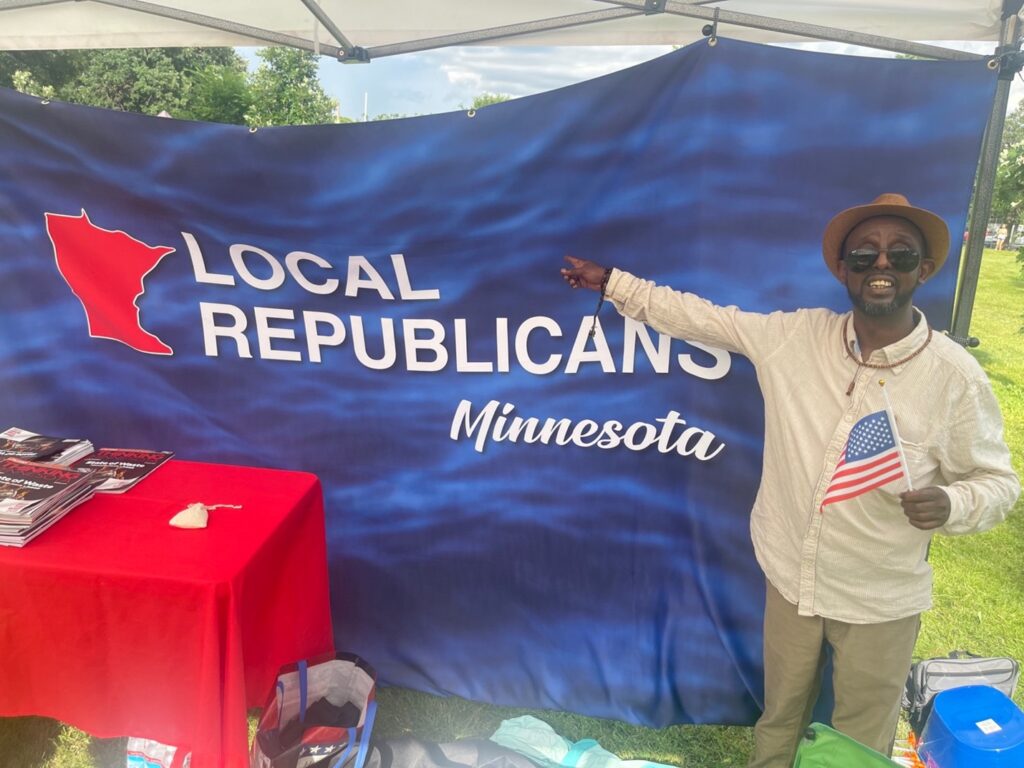
As Republican people of color, we know a lot about history and politics. We see the reasons behind the current war in Iran. From our own experiences, including fighting extremism and being recognized (this author, Mohamed Ahmed, was named a Citizen Diplomat by the U.S. State Department), we know that most terrorism is supported by governments. The fight against ongoing violent extremism is hard and still going on.
To understand Iran’s role today, it helps to look at three key moments:
– The Shah: For many years, Iran was ruled by the Shah, who was supported by America and Britain.
– The Revolution: In 1979, Ayatollah Khomeini and diverse Iranian groups overthrew the Shah in the Islamic Revolution, creating a new religious government. Many in the West saw this shift as a turn toward extremism. However, for some Iranians, the revolution was a popular uprising against foreign interference and dictatorship, reclaiming national identity and independence.
– Regional Reach: After the revolution, Iran began to spread its influence across the region, supporting groups like Hezbollah, paramilitary groups in Iraq and Syria, and the Houthis in Yemen. These actions have often challenged American interests and allies, especially Israel, and have affected security in the region. (Robinson & Merrow, 2024)
Iran’s Capabilities and Regional Interactions of Past
Iran is an old country with a long history of civilization, and its technology and military power are growing. It now has a modern military industry that makes advanced weapons, including drones and missiles. These changes, along with Iran’s push for nuclear technology, are reasons for the current war.
Recent intelligence reports say that Iran could soon be able to make enough weapons-grade uranium for a bomb more quickly, depending on how much it enriches and how many centrifuges it has. Reports also say that Iran now uses over 6,000 advanced centrifuges, which makes it much faster to develop a weapon. (Iran’s Nuclear Timetable: The Weapon Potential, 2024) Some estimates suggest Iran could amass enough fissile material for a weapon within months if negotiations fail to slow or halt its program.* Meanwhile, looking at past nuclear talks with Iran and other nations, major diplomatic breakthroughs have sometimes happened in periods as short as six months to a year, but in other cases have dragged on much longer. This means we are watching two ticking clocks side by side: the time it may take Iran to build a weapon, and the time world leaders have to work out a deal. By comparing the pace of Iran’s technical progress with the average length of successful negotiations, we see that the window for diplomacy is very limited and now closed to war means. This urgency should motivate us to focus on proactive engagement before technical milestones are reached. If Iran gets nuclear weapons, it could change the balance of power in the region. For Israel, this is about survival, and for America, it is a national security issue and a show of strength. According to a recent report from the Associated Press, the International Atomic Energy Agency says it cannot confirm whether Iran has stopped enriching uranium or account for how much enriched uranium the country possesses, following recent conflict and strikes on Iranian nuclear facilities (e.g., Iran deal 2015, North Korea, etc.).
The long-standing split between Sunni and Shia groups in the Middle East makes the situation even more complicated. Past conflicts, such as the Iran-Iraq War, were shaped by these religious and political differences, often with the help of Western countries.
The Cost and Continuity of Conflict
According to the World Bank, wars in the Middle East have caused great human suffering and long-term damage to national economies and infrastructure. These problems help explain why America remains involved in the region. As Republican people of color, we are not surprised by this new war. Yet instead of giving in to disappointment over being drawn back into Middle Eastern conflicts, we see an opportunity to push for a new approach rooted in problem-solving and possibility. Every time we try to leave, we get pulled back in, spending huge amounts of money and lives on wars that never seem to end. But what if this is the moment to pivot from reacting to conflict to investing in solutions, like supporting regional energy innovation or fostering new channels for international dialogue that could build economic interdependence and stability? This kind of forward-thinking agenda could help transform recurring setbacks into opportunities for leadership and renewal. Muhammad Salman Akbar notes that the Middle East has long been a battlefield for powerful empires, from the Assyrians and Babylonians to the Romans and Byzantines, making conflict a regular part of the region’s history. (The Fall of Empires and the Formation of the Modern Middle East, 2016, pp. 204-216)
While conflict continues, we can support changes at home by pushing for clear war policies and making sure veterans and their families get strong support when they return. We can also help by supporting efforts that encourage talking, rebuilding, and recovery in affected areas. These steps offer hope that, over time, a commitment to peace and change could help break the cycle and build a safer future. We must try as Americans who value peace, even as we stay strong.
Looking ahead, let us consider how we can shape a better future for those who have served. Today, veterans have access to a range of support programs, including the GI Bill for education, VA Home Loan Guaranty for affordable housing, VA health care services, and mental health programs like the Veterans Crisis Line. Organizations such as the Wounded Warrior Project, Team Rubicon, and local Veterans of Foreign Wars (VFW) posts also provide vital resources and community connections. Imagine the post-war world: Which one veteran benefit would you champion first? Would it be prioritizing access to mental health care, affordable housing, career training, or another essential service? By supporting or advocating for specific existing programs or helping organizations expand their impact, we can turn our empathy into real civic action and ensure that our gratitude toward veterans leads to meaningful results.
While conflict continues, we can support changes at home by pushing for clear war policies and making sure veterans and their families get strong support when they return. We can also help by supporting efforts that encourage talking, rebuilding, and recovery in affected areas with loans and American Enterprise, not just aid. These steps offer hope that, over time, a commitment to peace and change could help break the cycle and build a safer future. We must try as Americans who value peace, even as we stay strong.
Questions of Morality, Strategy, and Security
Is this war justified by morals, strategy, or national security? That is not for individual citizens to decide, but for the government, led by President Donald J. Trump, a bipartisan majority of Congress, and national security leaders. They have information that we, the public, do not know or understand. Our constitutional republic is based on representative leadership. We elect our leaders; they make decisions; and we decide at the ballot box whether to keep them. Free People Power!
As citizens, our role is not just to agree or disagree, or to support or oppose, as is our right in a free society. We can also take action to make our voices heard. For example, we can write letters or emails to our representatives in Congress to share our views or support veterans through advocacy. Joining peaceful demonstrations for or against the wars, supporting organizations that work for peace or help those affected by war, and taking part in public discussions are all ways we can influence decisions. By doing these things, we move from thinking to real participation in our democracy. This is our Free People Power!
Standing with Our Armed Forces
Most Americans will never accept criticism of our armed forces. We, the Republican People of Color, share this view. We support our troops, especially when they are at war.
A nation without heroes—those who volunteer to serve and often risk their lives—is weaker.
Pity a nation without heroes!
America is not without our Heroes.
More than anything, we owe them our firm support out of duty. This duty to stand by those who protect us is the guiding principle that rises above all other concerns in times of war. It is not something we debate as free people. We may hope for the safety of Iranian citizens of all backgrounds, the people of Arab nations, and Israeli civilians, but our duty to support our troops comes first. Yet supporting our troops and caring for others caught in the crossfire are not opposing values—they reflect the best of who we are as Americans. In fact, when we raise each other up in times of war, we strengthen the sense of unity and shared humanity that makes our nation strong. Our commitment to standing by our service members goes hand in hand with our capacity to recognize the dignity and suffering of all innocent people affected by conflict. Rather than being in conflict, true patriotism can inspire us to see everyone touched by war as deserving of dignity and empathy. By opening our hearts to all those impacted, we build bridges—across backgrounds, beliefs, and borders. Above all, we hope our troops come home safely. For those who do not pray, showing goodwill and support is also part of being American.
In these hard times, let’s support our troops in practical ways, like offering kind words, volunteering to help their families, or sending care packages. Every gesture matters. War has come, but we still hope and work for peace to return. Until then, let’s lead with compassion and stand together for those who serve.
References
(2026). Few Americans support U.S. military action against Iran, but a majority think it’s likely. YouGov. https://today.yougov.com/politics/articles/54158-few-americans-support-usa-military-action-against-iran-majority-think-it-is-likely-february-20-23-2026-economist-yougov-poll
(2025). Casualties of the Twelve-Day War. Wikipedia. https://en.wikipedia.org/wiki/Casualties_of_the_Twelve-Day_War
(September 4, 2025). Fact Sheet: President Donald J. Trump Restores the United States Department of War. The White House. https://www.whitehouse.gov/fact-sheets/2025/09/fact-sheet-president-donald-j-trump-restores-the-united-states-department-of-war/
(n.d.). Myth of the Spat-on Vietnam Veteran. Wikipedia. https://en.wikipedia.org/wiki/Myth_of_the_spat-on_Vietnam_veteran
(2024). Iranian Revolution. Encyclopedia Britannica. https://www.britannica.com/event/Iranian-Revolution
Robinson, K. & Merrow, W. (2024). Iran’s Regional Armed Network. Council on Foreign Relations. https://www.cfr.org/article/irans-regional-armed-network/
(2024). Iran’s Nuclear Timetable: The Weapon Potential. Iran Watch. https://www.iranwatch.org/our-publications/articles-reports/irans-nuclear-timetable-weapon-potential
Borger, J. (September 20, 2023). Crown Prince confirms Saudi Arabia will seek nuclear arsenal if Iran develops one. The Guardian. https://www.theguardian.com/world/2023/sep/21/crown-prince-confirms-saudi-arabia-seek-nuclear-arsenal-iran-develops-one
Hamrah, S. (2016). The Iran-Iraq War: The Use of Religion as a Tool. E-International Relations. https://www.e-ir.info/2016/02/07/the-iran-iraq-war-the-use-of-religion-as-a-tool/
(2016). The Fall of Empires and the Formation of the Modern Middle East. Orbis 60(2), pp. 204-216. https://doi.org/10.1016/j.orbis.2016.02.001
(February 27, 2026). How Iran attack could shake energy markets and prices. Axios. https://www.axios.com/2026/02/28/us-iran-attack-energy-oil-prices
Lind, J. (2024). Back to Bipolarity: How China’s Rise Transformed the Balance of Power. International Security 49(2). https://doi.org/10.1162/isec_a_00456
(February 27, 2026). U.S. and Israel begin “major combat operations” in Iran. Axios. https://www.axios.com/2026/02/28/iran-attack-trump-us-israel-strikes
(February 27, 2026). A new Gallup poll shows how Americans’ sympathies have shifted in the Israeli-Palestinian conflict. Associated Press. https://apnews.com/article/2614e22b0ddabe514424680b71e1802f
(September 21, 2003). US ‘plans to attack seven Muslim states. Al Jazeera. https://www.aljazeera.com/amp/news/2003/9/22/us-plans-to-attack-seven-muslim-states
(2002). Global Publics View the United States. Pew Research Center. https://www.pewresearch.org/global/2002/12/04/chapter-4-global-publics-view-the-united-states/
Carter, A. (October 27, 2016). Remarks by Secretary Carter at the University of Oxford’s Blavatnik School of Government in Oxford, England. U.S. Department of Defense. https://www.defense.gov/News/Transcripts/Transcript-View/Article/936831/remarks-by-secretary-carter-at-the-university-of-oxfords-blavatnik-school-of-go/
Fox, A., Peach, K., Gupta, K., Ripberger, J. & Jenkins-Smith, H. (2024). Public Opinion and the Iran Nuclear Threat: Lessons from the NS 2024 Survey. Institute for Public Policy Research and Analysis. https://www.ou.edu/ippra/news-events/2024/white-paper-series-ns24-02
(September 4, 2025). Fact Sheet: President Donald J. Trump Restores the United States Department of War. The White House. https://www.whitehouse.gov/fact-sheets/2025/09/fact-sheet-president-donald-j-trump-restores-the-united-states-department-of-war/