Drugs and Crime and the Addictions of America
- Articles
republipeclr
- 0
- 16 minutes read
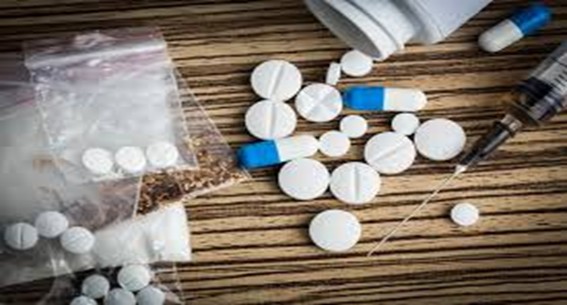
Drugs and Crime and the Addictions of America
An American political, social, health, and crime issue.
By Republican People Of Color
The Scope and Reality of Addiction
America’s drug crisis is both widespread and deeply personal, touching people in every community. Spending a weekend with a friend who struggles with addiction showed me how much these challenges shape daily life. He wakes up anxious each day, torn between his responsibilities and strong cravings. Even simple things like eating or making plans can feel overwhelming. He gets messages from dealers and reminders about work, which add to his stress. In Minnesota, an ‘eight ball’ of cocaine, often mixed with other substances, costs about $180 and gets weaker as it passes from person to person. (North Central HIDTA 2022 Drug Prices, n.d.) Prescription drugs like Adderall, OxyContin, and Percocet are also commonly misused. The language around addiction has changed, too; people now say ‘fent heads’ instead of ‘crackheads.’ Drugs are found in schools, public places, and even places of worship. Synthetic drugs like Kush, as well as stronger forms of opium and marijuana, are now available and sometimes target young people. Alcohol is still widely used. Because demand is so high, suppliers take big risks and change their tactics, using technology and social media to reach buyers.
America’s Ongoing Struggle
Because of these crises, addiction in America isn’t just a statistic—it’s torn apart families, strained friendships, and left millions living each day in quiet agony. More than 20 million Americans over 12 have struggled with substance use disorder this year alone. ((SAMHSA), 2024) Each number is a brother, a mother, a friend, or a child caught in a battle that many don’t survive. The price—over $740 billion a year—is paid not just in dollars, but in broken dreams, empty chairs at dinner, and futures lost. (Economic Costs of Alcohol and Drug Abuse Estimated at $246 Billion in the United States, 1998) The urgency is not abstract; it’s searingly real.
Drugs have always been around, but now they are stronger and more dangerous. Today, they harm people both physically and emotionally. The effects happen faster than before. Research shows that addiction changes the brain, damages organs, and leads to dependency. (Parial, 2025) The National Institute on Drug Abuse says drug use can take over the brain’s reward system, making it hard to quit. (Drugs of Abuse Target The Brain, n.d.) Experts like Dr. Gabor Maté also point out emotional and spiritual damage. Substance use can take away a person’s sense of self, hope, purpose, and connection to others. (Addiction, n.d.) Understanding both physical and emotional sides explains why medical treatment and policy focus on the body. But recovery and community support must address deeper issues as well. Focusing on just one part is not enough. We need many types of help, because addiction affects every part of a person’s health.
A Brief History of Drug Consumption
In the late 1800s and early 1900s, people in America could buy cocaine legally over the counter. Even well-known figures like Sigmund Freud used it. Coca-Cola’s original recipe included cocaine. Opium became part of American life through Asian immigrants. The phrase ‘are you hip?’ comes from how people would lie on their hips to use opium. That saying is still used today. (The Double Life of Coca, 2017)

The Evolution of the War on Drugs
Over time, America’s response to the drug crisis has shifted, with policies evolving sequentially through distinct periods. Initially, the country focused on strict law enforcement, later on international collaboration, and more recently on treatment and care. Each period marked a change in both strategy and goals.
The strict enforcement era started when President Nixon announced the ‘War on Drugs’ and set up the DEA. This approach focused on tough law enforcement, longer sentences, and making drug use a crime. The ‘Just Say No’ campaign, led by Nancy Reagan, also pushed this message and raised public awareness. Later, under Presidents Clinton and Bush, the government continued to use tough penalties and increased enforcement, both in the U.S. and abroad. This included actions like removing Manuel Noriega in Panama and supporting programs to destroy drugs in Latin America and Southeast Asia. RICO laws were used to go after criminal organizations at all levels, and legal rules were expanded to allow for more aggressive prosecution.
Alongside domestic enforcement, the U.S. government began increasing diplomatic efforts in the late 1980s and 1990s to combat global drug trafficking. International collaborations aimed to disrupt drug production abroad, leading to multinational crackdowns, enforcement partnerships, and talks with countries including China and Mexico. These tactics focused on overseas smuggling operations.
More recently, a new approach has started to take shape, focusing on treatment and recovery as the main ways to address addiction. President Biden has worked to make treatment more accessible, reduce stigma, and support people in recovery, partly because of his own family experiences. However, some zero-tolerance policies continued under President Trump, who called cartel drug dealers transnational terrorists and used military action.
Today, the federal government led by President Trump, uses a mix of these different approaches. It combines law enforcement, international cooperation, and a stronger focus on health-based solutions. This mix is one reason why drug policy is still complicated and keeps changing.
International and Domestic Efforts
When law enforcement fails, the U.S. resorts to diplomacy. It focuses on stopping the production and smuggling of fentanyl ingredients. China is often mentioned as a source. Some people see this as a reaction to the opium wars of the 1800s. According to the Centers for Disease Control and Prevention, there were an estimated 80,391 drug overdose deaths in the United States in 2024, which is nearly 27 percent fewer than the 110,037 deaths estimated in 2023.S.
Overdose Deaths Decrease Almost 27% in 2024, 2025) This shows how serious the problem is. But this raises a bigger question. Why do so many Americans still want powerful opioids, even as enforcement increases overseas? What makes people seek out these drugs, even though they know the risks? Looking at the social, psychological, and economic reasons behind drug use is just as important as stopping the supply. If we do not understand why people start using drugs, efforts to stop them can only go so far.
The Individual Cost of Addiction
My friend is what people call a ‘functioning’ addict. He still has a job, but most of his money goes to drugs. He is young and single, but his addiction has hurt his health and his outlook on the future. Even though he is a good person, drugs have made it hard to be around him. His story is similar to what experts see in many cases of substance use disorder. He often cannot cut back, even after trying many times, spends a lot of time getting and using drugs, and keeps going even when it causes problems in his life. He says that early trauma and neglect left him anxious and feeling out of place with his family and community. Over time, using drugs changed from something social to a way to cope with ongoing pain and stress. Like many others, his addiction started with trauma, neglect, boredom, his environment, family history, or culture. Popular culture has made drug use look appealing, from the Jazz Age, Rock and Roll to hip-hop. Music and media often show both using and selling drugs in a positive light. This makes drug use seem normal and increases demand. If we keep ignoring the real reasons behind addiction, the cycle will continue, and the war on drugs will not work.

Seeking Solutions
Are there out-of-the-box solutions?
There is no easy answer or quick fix for America’s drug problem. The issue is much more complicated than described here. But what if we tried to think differently and looked at two very different policy options? One side could decriminalize some drugs and invest in public health, prevention, and supervised use centers to reduce harm. For example, Portugal decriminalized personal drug possession in 2001 and focused on treatment instead of punishment. Since then, drug-related deaths and HIV rates have dropped, and more people have gotten help. Oregon recently decriminalized personal drug use through Measure 110, aiming to connect people with health services instead of sending them to jail. However, according to a report from Oregon Public Broadcasting, an audit by the secretary of state’s office has found gaps in how the state health authority has implemented the law, and the results so far remain unclear.
On the other hand, the government could choose the strictest penalties for drug trafficking and use. It could increase surveillance and make sentences mandatory. Countries like Singapore and Saudi Arabia have tough penalties, including long prison terms and even the death penalty. They report some of the lowest drug use rates in the world. However, critics say these harsh penalties can cause human rights problems and strain the legal system. Each extreme has its own pros and cons. Looking at both might help us find new ideas and challenge assumptions. By comparing the costs and benefits of bold solutions and using real-world examples, we can start a broader conversation about creative, practical answers.
Moving Forward: Carrot and Stick Approaches
History shows that making progress takes both rewards and consequences. Compassionate actions like treatment, intervention, and support should be combined with fair legal efforts to break up drug networks. Since money is what keeps the drug trade going, it is important to track the money, from bankers to street dealers, to help stop the problem.
The Political and Social Cost
Fighting drugs is something both political parties agree on, but getting rid of drugs completely is unlikely. The economic and social costs are huge, including law enforcement, courts, healthcare, and rehab, all paid for by taxpayers.
Real progress will need changes in culture and attitudes, especially in popular culture. For example, musicians in hip-hop and country music, who have millions of fans, could share messages about healthy choices and recovery. Influencers on TikTok, YouTube, and Instagram could work with community groups to share real stories about overcoming addiction and resisting peer pressure. Sports leagues, athletes, and media companies could spread anti-drug messages to large audiences in creative ways, like halftime shows, documentaries, or viral challenges. Even streaming services, through their shows and movies, can shape how people see addiction and recovery. By working with these cultural leaders and platforms, we can help change attitudes about drug use and make honest conversations about prevention and recovery more common.
Students and educators can also make a real difference on their campuses and in their communities. Student groups helped by educators can run awareness campaigns, set up forums for open talks about addiction, or invite people in recovery to share their stories. Peer support groups can offer safe spaces for students dealing with substance abuse or for those who want to help friends. Creating digital content, such as short videos or podcasts, can help share real experiences and teach others on campus and online. Events like ‘Red Ribbon Weeks,’ pledge drives, or wellness activities can get people involved and connected. By doing these things, students can build a stronger campus culture, fight stigma, and encourage practical steps for prevention and support.
We need to build a stronger and better-informed community. Even though it is hard, we can reduce the impact of drugs for the sake of our children, friends, families, and society. We have to keep looking for solutions, considering different viewpoints and new ideas.
What can we do?
The main question is how to help a friend who is struggling with addiction. Many people want to help and hope things will get better. While it is important to remember that sometimes the answer is out of our hands, there are practical ways to support someone facing addiction. You can listen without judging, offer support and encouragement, and share information about counseling, helplines, or treatment centers. Checking in regularly, providing safe and sober spaces, and encouraging healthy habits can help. It is also important to set healthy boundaries and avoid enabling harmful behavior or putting yourself at risk. You might help look up local support groups or go with them to appointments if they want. Most of all, let them know you care, and that help is available, but real change depends on their willingness to accept support.
The truth is, addiction leads to self-destruction, both physically and mentally, and it wears down a person’s spirit. Addiction is a real struggle, and while personal choice matters, it is important to understand that repeated drug use changes the brain and makes quitting much harder. These changes can weaken self-control and make it feel like the ability to choose is slipping away. Real change often happens when someone reaches their own turning point, but it is not just about willpower. The effects of addiction on the brain mean that outside help and support are often needed because recovery is a complex process. Until someone is ready, both biology and environment can make recovery very hard. Knowing this can help us stay compassionate, respect personal responsibility, and avoid blaming those who are struggling.
These choices addicts make come with both legal and social consequences. In the end, the responsibility and results belong to the individual. As a society, we need to balance compassion with accountability when dealing with drug addiction. Real empathy means offering support while also expecting responsibility. Remembering this is important as we face the bigger issue.
In the end, it all comes down to choices, and choices have consequences. I hope people struggling with addiction can see this and find a way out. But beyond personal choices, what are we willing to do together, as a community and a country, to create new paths to prevention, hope, and healing? How can policymakers, leaders, and citizens rethink their roles to give real support and break the cycle for future generations? Maybe the most important question is: what part will each of us play in turning hope into action?
Conclusion
Addiction is one of the most painful and complex issues facing individuals, families, and society. It challenges our ideas about freedom, responsibility, compassion, and limits. While empathy and support matter deeply, they cannot replace personal choice. No policy, friend, or institution can force someone to change who is not ready to do so. Real recovery begins only when the individual decides that the cost of continuing is greater than the fear of stopping.
As friends and as a society, our role is not to carry consequences that are not ours to bear. We can care without enabling, support without surrendering boundaries, and remain compassionate without denying accountability. The war on drugs is not only about enforcement, treatment, or policy—it is also about acknowledging that choices have consequences, both legal and social, and that those consequences belong to the person making them. This should not be made a societal burden.
In the end, the hardest truth is also the most honest one: we cannot save everyone. But we can speak truth, offer support where possible, and refuse to abandon common sense. My hope is that those caught in addiction find their turning point, and that as a society we continue to balance mercy with responsibility. Only then can hope become action, and action become real change.
.
References
(n.d.). North Central HIDTA 2022 Drug Prices. https://northcentralhidta.org/wp-content/uploads/2024/10/North-Central-HIDTA-2024-Threat-Assessment.pdf
(SAMHSA), S. A. (2024). Key Substance Use and Mental Health Indicators in the United States: Results from the 2024 National Survey on Drug Use and Health. SAMHSA. https://www.samhsa.gov/data/sites/default/files/reports/rpt56287/2024-nsduh-annual-national/2024-nsduh-annual-national.html
(May 12, 1998). Economic Costs of Alcohol and Drug Abuse Estimated at $246 Billion in the United States. National Institute on Alcohol Abuse and Alcoholism. https://www.niaaa.nih.gov/news-events/news-releases/economic-costs-alcohol-and-drug-abuse-estimated-246-billion-united-states
Parial, D. (2025). Addiction and Its Effect on the Brain: A Review of Structural and Functional Alterations in the Human Brain. Youth Neuropsychology Society. https://youthneuropsychology.com/2025/08/04/addiction-and-its-effect-on-the-brain-a-review-of-structural-and-functional-alterations-in-the-human-brain/
(n.d.). Drugs of Abuse Target The Brain. National Institute on Drug Abuse. https://www.addictionedufoundation.org/drugs-of-abuse-target-the-brain/index
(n.d.). Addiction. Dr. Gabor Maté’s official website. https://drgabormate.com/addiction/
(2017). The Double Life of Coca. SAPIENS. https://www.sapiens.org/culture/coca-cocaine-legality/
(May 13, 2025). U.S. Overdose Deaths Decrease Almost 27% in 2024. Centers for Disease Control and Prevention. https://www.cdc.gov/nchs/pressroom/releases/20250514.html