
Peace Through Strength: America’s Role in a Changing World
- Articles
republipeclr
- 0
- 14 minutes read
Peace Through Strength: America’s Role in a Changing World
Why Selective Engagement Beats Endless Intervention
By Republican People of Color
Introduction
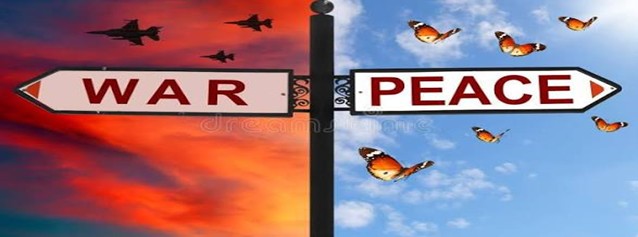
The idea of “Peace through Strength” is guiding America’s approach to the world under Trump administration. In U.S. foreign policy, “peace through strength” means that the nation seeks to prevent conflict and protect its interests by maintaining a strong military and a clear willingness to use it if necessary. The belief is that the credible threat of force discourages aggression from other countries and helps secure peace. This approach has influenced U.S. foreign policy and military decisions, especially as the country’s global role has drawn both praise and criticism.
Warnings and learnings from History
George Washington, the first U.S. president, advised the nation to avoid getting too involved in other countries’ affairs. After World War II and the fall of Bolshevism communism in 1990, America became the world’s main power. According to the Bill of Rights Institute, Francis Fukuyama predicted that liberal democracy would spread throughout the world, describing this as the “end of history,” but this prediction was ultimately too optimistic and did not reflect how global politics actually unfolded. The U.S. got involved in many wars, coups, and changes of government, both directly and indirectly. The wars in Iraq and Afghanistan, and support for Ukraine against Russia, show how wide America’s global role has become. The Middle East remains a difficult area, with the U.S. deeply involved in a region marked by long-standing ethnic, religious, sectarian and tribal divisions.
It’s important, though, to look more closely at these past examples and ask what really makes them matter for today’s choices. Not every past conflict or action gives us a clear lesson for now. Sometimes, the situation was special, or the risks were very different. For example, while the long wars in Iraq and Afghanistan had mixed results and high costs, other times in U.S. history show that holding back worked. After the Vietnam War, American leaders mostly stayed out of new wars in Indochina, letting local countries find stability on their own. In the 1980s, after U.S. peacekeeping in Lebanon led to tragic losses, the United States decided not to get directly involved in later Lebanese conflicts, showing a careful approach that avoided getting stuck deeper. On the other hand, strong action in the Balkans in the 1990s, like U.S.-led NATO missions in Bosnia and Kosovo, helped stop ethnic violence and bring lasting peace, showing that stepping in can also work well in some cases. In the Gulf War in 1991, the U.S. worked with other countries and used force for clear, limited goals, pushing Iraqi forces out of Kuwait but not removing Saddam Hussein, which kept costs and long-term promises lower. This example of limited action is different from more open-ended ones. Looking at these results, we see that history offers many lessons, some that support getting involved and others that show the value of holding back.
According to a report from Responsible Statecraft, the United States’ policy of frequently using military force is a relatively recent development, departing from the more restrained approach advocated by leaders like Theodore Roosevelt, who advised, “Speak softly and carry a big stick.”” In recent years, America has used its power more forcefully. According to the Costs of War Project at Brown University, the wars in Iraq and Afghanistan, along with related operations, have cost the United States over $8 trillion and resulted in more than 900,000 deaths, including those of U.S. service members, contractors, allied troops, opposition fighters, civilians, journalists, and humanitarian workers. These costs go beyond just financial expenditures and include the ongoing sacrifices of service members, government workers, contractors, and veterans, many of whom still need more support. At the same time, the U.S. continues to spend large amounts on military operations around the world. (Liang et al., n.d.)
Shifting Strategies and Global Realities
To see why America should rethink how and when it uses its power, this section looks at how using simple tests—strategic, moral, and economic—can help guide U.S. choices more carefully in today’s complicated world. Under the current administration, there has been a big change in how things are done. While war is sometimes seen as something that cannot be avoided, people are asking if America really needs to be involved in so many fights around the world, often to protect business, friends, and the freedom of other countries. To answer this, it helps to set clear rules for when using U.S. force makes sense. First, there is a strategic test: is the threat directly against the safety of the United States or its closest allies, or does action protect long-term American interests and world stability? Second, there is a moral test: will stepping in stop a large loss of innocent life, support basic democratic values, or stop clear wrongs like genocide? Third, there is an economic test: do the expected costs make sense compared to the likely benefits, both for Americans and for others involved? By using these tests, leaders can better decide which wars and actions are truly needed, and which are not.
Still, these tests are not perfect, and there are important criticisms to think about. Some say the strategic test can be twisted to allow almost any use of force by calling it a “long-term American interest.” Others note that moral choices are often personal and can be used only when it suits political goals. Even the economic test can miss hidden costs or long-term problems that are hard to see. By recognizing these limits and carefully considering the real risks and trade-offs, leaders and the public can avoid rushing into decisions or missing important outcomes.
America’s ongoing commitments to groups like NATO, the United Nations, and other countries stemmed from its special position as the world’s preeminent power. This setup brought stability and wealth, but it also cost a lot for American soldiers and, some say, for people everywhere over the past 80 years. (Agreement on 5% NATO Defence
Spending by 2035, 2025)
America’s Changing Role in a Multipolar World
Today, more Americans are unsure about being the world’s policeman. The world is no longer led by just one superpower. Now, a group of dictatorships, communist countries, and religious governments is challenging the old way of doing things. Changes in technology, economies, and cultures, along with rising nationalism and anti-American feelings, have made America’s position harder. The U.S. is often blamed for problems it cannot fix, much like Soviet leaders once blamed Stalin and America for their own troubles. Still, communism lasted for decades in the Soviet bloc, showing that other systems can last too.
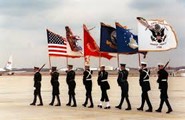

Peace Through Strength in a Multipolar Era
“Peace through strength” does not mean stopping all wars. Instead, it means picking important fights to protect American interests and leadership in a world with many strong countries. The Monroe Doctrine, issued by an early president, said the Americas should be kept safe from outside threats at a time when the Americas had weak economic ties and European powers sought to intervene directly. In the 1800s, this idea focused mostly on keeping foreign armies out of the Western Hemisphere, with clear borders and few economic ties. Today, the Americas are linked by shared trade, markets, and security problems. Many countries in the region—from Chile and Bolivia to Argentina and El Salvador—want to join America and get help with security, trade, and immigration. In this modern setting, America’s influence comes less from strict rules and more from working together and connecting with others.
It is important to note that some events discussed in this section, particularly those related to U.S. engagement with Venezuela, are hypothetical and reflect potential scenarios rather than confirmed historical developments. For example, according to the Associated Press, Venezuela has recently engaged in diplomatic talks with the U.S., as illustrated by a visit from the chief of U.S. Southern Command to Caracas, where he met with Venezuela’s acting president and other top officials, following the U.S.-led capture of former President Nicolás Maduro on drug trafficking charges. This scenario is speculative and meant to illustrate ways the U.S. could help maintain order and stability in the region if such a situation were to occur. Even in places like Venezuela, where the Bolivarian Chavista inspired government is still in charge, America sees common interests and historical ties.
By recognizing the differences between old ideas and today’s world, the U.S. can adjust “peace through strength” to fit a world where strength also means working closely with partners, not just keeping others out.

The Middle East: Pursuing Integration and Security
In the Middle East, the fighting in Gaza has slowed, with hostages being released and new talks starting. A group of 60 countries has formed a Peace Board instead of relying on the United Nations, which often does not work well, to address the region’s hard problems. The Abraham Accords, made during the Trump administration, are a big step toward bringing the region together. The idea is simple: America’s promise of peace, backed by its strength, encourages Muslim-majority countries and Israel to try to live together. To make the Abraham Accords real, the United States offered clear rewards, such as major arms sales and stronger security commitments to the regional allies, ensuring they are protected from external threats. The U.S. also provided significant economic assistance and investment opportunities, including direct aid and improved access to American markets, to support the economies of the countries that joined the Accords. These concrete steps gave regional partners not just promises of peace but also the tools and safety to make working together worthwhile. A safe Israel and a respected, independent Palestinian state are the main goals, but the long history and deep religious roots of the conflict, involving Christianity, Judaism, and Islam, make it hard to solve. According to a report from Time, President Donald Trump stated in his 2026 State of the Union address that despite U.S. and Israeli military strikes against Iranian nuclear sites in 2025, Iran has attempted to restart its nuclear weapons program, highlighting ongoing concerns about Iran’s ambitions and the continued U.S. military presence as a reminder of America’s willingness to act if diplomacy does not succeed.
America’s Influence in Africa and Asia
In Africa and Asia, many countries see that working with the United States brings benefits like peace, access to markets, and stability. According to an AP News report, officials believe that when lasting peace is reached, it opens the door for more US and Western investment, which then creates jobs and helps people do better. In these areas, America’s main focus is business, and everyone can gain from stability and working together.
Conclusion: The Trump Administration’s Approach
The Trump administration, envisioned here with Pete Hegseth as Secretary of Defense, Marco Rubio as Secretary of State, Treasury Secretary Bessent and John Ratcliffe leading the CIA chose a policy of strong but careful involvement. According to a report from the Mises Institute, rather than becoming less involved in global conflicts, the United States had actually increased its military interventions over recent decades, with 126 interventions occurring between 2000 and 2017 alone, which marks a sharp rise compared to previous periods. This approach does not shapes America’s current role: maintaining security and influence while seeking opportunities to build peace and partnerships whenever possible.
While supporters of the old permanent conflict policy argue that a firm global presence has helped deter threats and preserve American interests, critics point out that the rise in interventions has not always delivered lasting stability or met its intended objectives. Some successes include strengthening alliances, disrupting terrorist networks, and supporting peace agreements, such as with the Abraham Accords. On the other hand, critics note that extended commitments have sometimes led to high costs, unintended consequences, or mixed results in places like Afghanistan and Iraq. Scholars and policymakers continue to debate whether the previous administration’s emphasis on global conflict engagement had effectively balanced the goals of peace, strength, and restraint, or whether they had risked overextension and drawn the U.S. into unnecessary conflicts. By considering both achievements and criticisms, we can better understand how these policies have met their aims.
Peace is more valuable than gold. We might not all agree on what peace means, but we all understand what it feels like to live without it.
We proudly support our service members and government agencies, and when war happens, but we honor their efforts to bring peace. This is not just a Republican or Democratic issue—it is a human and American value, especially now under the Trump Administration: fewer wars, more peace, more trade, and more partnerships.
For example, under this administration, active overseas troop deployments fell by nearly 20 percent by 2025, and the number of new large-scale military operations decreased to their lowest point in over two decades. At the same time, U.S. trade agreements with key allies helped maintain robust economic ties, with Latin America and the Caribbean accounting for 19.2 percent of total U.S. trade by 2025, a share similar to the previous year and exceeding pre-pandemic levels. According to a United Nations Economic Commission for Latin America and the Caribbean report, these developments highlight how America can remain strong while prioritizing peaceful engagement whenever possible.
“Peace through Strength” is the defining value of the Trump Administration: fewer wars, more trade, and global partnerships. It also helps in creating less refugees in our planet, hence less migration of strife and harm. Republican People of Color endorse this fully. Let peace reign on earth, as far as we can achieve it, and let trade flourish among nations in partnership.
Peace gets not only America but Humanity that ally with it more Gold, for peace is very profitable under Trump Administration. Especially when Americas strength comes to bear. Carrying a big stick and negotiating trade with all.
References
Norton, B. (September 13, 2022). US has launched 251 Military Interventions Since 1991, and 469 since 1798. PopularResistance.org. https://popularresistance.org/us-launched-251-military-interventions-since-1991-and-469-since-1798/
Liang, X., Tian, D. N., Silva, D. D., Scarazzato, L., Karim, Z. A. & Ricard, J. G. (n.d.). Trends in World Military Expenditure, 2024. https://www.sipri.org/publications/2025/sipri-fact-sheets/trends-world-military-expenditure-2024
(June 24, 2025). Agreement on 5% NATO Defence Spending by 2035. The Hague Summit Declaration. https://en.wikipedia.org/wiki/Agreement_on_5%25_NATO_defence_spending_by_2035
(January 28, 2026). Trump’s wide ambitions for Board of Peace spark new support for the United Nations. The Washington Post. https://www.washingtonpost.com/world/2026/01/29/board-peace-trump-un-security-council-china/7dd89dee-fd32-11f0-954b-b80c7ed67fc7_story.html/
Press, A. (September 30, 2025). US military starts drawing down its mission in Iraq countering the Islamic State group. AP News. https://apnews.com/article/7110ec28de2fc8fcb620d86da104de06