Polling Data, War in Iran, and Midterm Election Predictions
- Articles
republipeclr
- 0
- 14 minutes read
Polling Data and Early Midterm Predictions
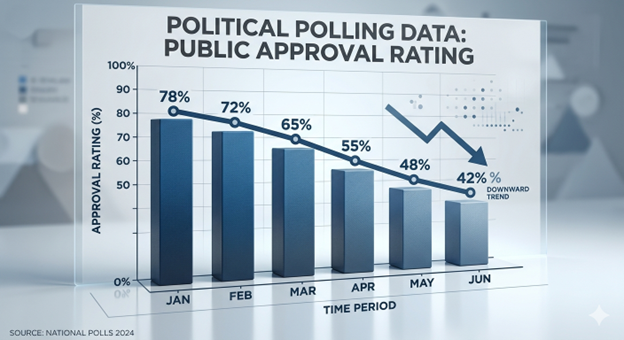
Recent polls, including those from Polymarket, reveal that the Iran war is directly shifting the U.S. political situation and undermining the Republican Party’s prospects. The expected “rally-round-the-flag” effect—where national crises usually boost leaders—has not materialized, showing how the war is fueling dissatisfaction rather than unity.
Classic examples of the rally-round-the-flag effect—such as after 9/11 and the Gulf War—involved clear threats, broad patriotic sentiment, and unified leadership.
Current polling shows no boost for Republicans or the White House, underscoring that the Iran conflict’s unclear objectives, public unpopularity, and deep partisan divides are eroding support rather than fostering unity. This trend is a central factor weakening the Republican standing.
Political scientists have also noted that the rally effect is weaker when the public perceives the government’s motives as politically driven or the conflict itself as unnecessary (Mueller, 1973; Brody, 1991).
Diversionary war theory says governments may start wars abroad to distract from domestic problems. The Falklands War, started by Argentina’s junta, shows this when information is controlled, and the public can unite. In the current U.S.-Iran conflict, however, I am not arguing that the U.S. government is deliberately pursuing a diversionary war. Instead, I reference the theory to illustrate why rally effects can vary across political contexts. The sudden conflict and unclear reasons have hurt Republican chances. Unlike in earlier conflicts, the U.S. media sphere and scrutiny make it hard to achieve unity or distract from domestic issues (Lindsay, 2026).
Since the 1979 Islamic Republic Revolution, Iran and the United States have had a tense relationship, frequently involving secret fights. Now, they are in a direct conflict that could last for months or even years, depending on Iran’s actions. (U.S. Relations With Iran, 2026)
The U.S. wants to avoid an extended conflict. It uses air strikes to keep ground troops low and to weaken Iran’s power. Iran responds by closing the Strait of Hormuz and taking steps in the region. Oil prices are expected to rise sharply, affecting economies worldwide and disrupting business (Oil Market Report – March 2026, n.d.). This is a global problem. The U.S. is somewhat protected by its oil supplies and distance, but terrorism at home is still a risk.
Strategic Stakes: Resources and Nuclear Proliferation
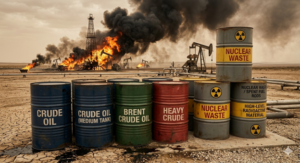
Instability in Iran, plans for nuclear weapons, and oil routes of trade control raise the stakes for the U.S. Instability increases anxiety about security. Voters become more critical of the party in power if chaos is not contained. If Iran gets nuclear weapons, people feel more danger. This raises worries about direct threats or the spread of nuclear arms. Fears often lead U.S. leaders to call for clearer policy (Fox et al., 2024).
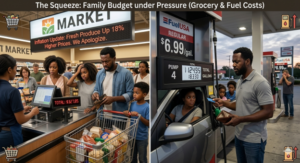
Iran’s control over oil supplies affects Americans by raising gas and goods prices. Economic frustration follows. When voters face higher costs and uncertainty, they are more likely to blame current leaders. (Who punishes the government? Income-based disparities in economic voting, 2026)
These escalating international and economic pressures mean that the defining challenge for Republicans in the midterm elections is overcoming the negative impact of the Iran war on popular opinion. The war’s effect on voter attitudes now acts as the main barrier to Republican success.
Still, it’s important to consider possible counterarguments. In some cases, the conflict could trigger a “rally-round-the-flag” effect, in which voters temporarily support the party in power during a foreign crisis. For instance, the 1991 Gulf War produced a significant boost in President George H.W. Bush’s approval ratings, and the 2002 midterm elections during the early stages of the war on terror saw Republicans make notable gains in Congress as national security dominated the political agenda.
These examples show overseas crises can help the party in power, especially with strong leaders. This could benefit Republican candidates if voters see them as strong on security. Current polls show Republicans struggling, but polls sometimes miss late changes in voter intentions. For example, this happened in the 2004 and 2016 elections. Polling can miss fast shifts. (Mercer et al., 2016) The Iran crisis could still help Republicans, depending on developments. For instance, if the U.S. military achieves clear, decisive victories that lower American troop casualties and quickly stabilize the region, public optimism could increase. Likewise, a drop in oil prices or visible improvements in the domestic economy might shift blame away from current leaders and renew support for the Republican Party. Strong, unified messaging around national security or successful negotiations that result in peace could also boost Republican prospects. These scenarios show that a reversal in public opinion is possible, depending on how the conflict and the economy evolve in the coming months.
Domestic Implications: The Petro Dollar and Public Mood
Many Americans do not realize how important the “petro dollar” is. Oil is sold for U.S. dollars, and the proceeds are recycled into the American economy. This system has helped the U.S. economy grow and stay steady for years (What Is the Petrodollar System and How Does It Work?, 2025). Maintaining a military presence in the region keeps oil flowing and supports U.S. debt, which helps stabilize global markets (Geopolitical dimensions of US oil security, 2018, pp. 558-565) (Ferragamo et al., 2025). Still, polls show Americans are increasingly frustrated by the costs of war and higher prices (Sanders & Catalini, 2026).
The current conflict in Iran is not motivating voters; instead, it is making people more unhappy with the Republican Party and the White House, which is molding the upcoming midterm elections. Falling poll numbers and growing pessimism show the Republican Party is struggling in the midterms. (Abbott & Williams, 2026)
However, it is important to discuss the reliability and limitations of both polling and prediction markets in more depth. Traditional polling methods can be prone to sampling error, nonresponse bias, and inaccurate likely voter models, all of which can affect poll results (Gelman et al., 2016). In contrast, prediction markets aggregate the views of many participants who buy or sell contracts based on election outcomes, helping synthesize information from a broad range of sources and sometimes outperform individual polls. However, prediction markets have their own weaknesses: they can be influenced by low trading volumes, herding behavior, and the fact that market participants may not be representative of the broader electorate. In fast-changing situations or with limited information, both systems can miss shifts in public opinion. Comparing the two helps highlight their strengths and weaknesses—polls are often useful for capturing a snapshot of public sentiment, while prediction markets may better reflect collective expectations, especially when major events are unfolding.
Changes in how people communicate, such as the decline in landline use and the rise of cell phones, have made it harder for pollsters to reach a representative sample.
Recently, response rates have dropped. This could distort data toward more engaged or opinionated people (AAPOR, 2024). Social desirability bias causes people to give expected answers rather than true opinions. Even good polls can miss late changes in public opinion or turnout, as in the 2016 and 2020 U.S. elections.
Prediction markets like Polymarket use many people’s expectations. These markets sometimes outperform polls, but have issues. Herding occurs when participants follow trends. Thin trading volumes let a few traders change prices (Arrow et al., 2008). Participant bias is another concern: people in these markets may not represent voters or may use incomplete information. Both polls and prediction markets may overlook sudden events, changes in turnout, or undecided voters.
Overall, even though forecasting is imperfect, prevailing trends show that the war in Iran is increasing voter frustration and improving Democratic prospects. This reinforces the central argument: the conflict and public disapproval are the primary factors undermining Republican chances in this cycle.
Economic Consequences and the Road Ahead
To summarize, Republican performance in the midterms depends on how voters respond to the Iran war and its economic effects. The central argument is that leadership in this crisis defines election results for both parties.
Each party has a different plan. Republicans focus on a stronger military in Iran and more domestic energy to lower oil prices. Democrats support diplomacy and targeted economic help.
Internal party divisions and candidate differences could shape results. Republican disagreements over war or economic strategy may weaken their message and unity. Candidates with controversial backgrounds or inconsistent positions can sway voters in key districts, even if the national platform is strong.
On the Democratic side, unity or division over the Iran conflict or economic assistance could also affect their chances.
If the conflict continues and the economy stays weak, Republicans will likely lose support in the elections. Only a quick end to the war and better economic conditions could improve their chances. In the end, election results will depend not only on how the Iran conflict develops and its effects, but also on how each party manages disagreements and the appeal of its individual candidates.
Republicans still have a chance. The Democratic Party is divided among Democrats, progressives, socialists, and some communists. These divisions can lead to disagreements on foreign policy, economic recovery measures, and responses to the Iran conflict. For example, mainstream Democrats may advocate for diplomatic solutions and measured military engagement, while progressives and left-wing factions might demand stronger opposition to military actions or more sweeping economic reforms. As a result, the Democratic message could become less unified, making it harder to rally the base or appeal to moderate voters. Internal debates over campaign priorities and candidate endorsements could further complicate electoral strategy in key districts. The midterms are almost 6 months away, and everything can change before then. In politics, one day is often like a lifetime in terms of impact.
References
(2025). Republican House seats after the 2026 midterm elections? Polymarket. https://polymarket.com/event/republican-house-seats-after-the-2026-midterm-elections/will-the-republican-party-hold-between-205-and-209-house-seats-after-the-2026-midterm-elections
(March 9, 2026). Polls show what Americans think about the war in Iran. PBS News. https://www.pbs.org/newshour/politics/polls-show-what-americans-think-about-the-war-in-iran
(2023). Iran–United States relations after 1979. Wikipedia. https://en.wikipedia.org/wiki/Iran%E2%80%93United_States_relations_after_1979
(April 5, 2026). The massive economic impact of the global energy crisis. Axios. https://www.axios.com/2026/04/06/economic-impact-global-energy-crisis
Colgan, J. D. (2013). Oil, Conflict, and U.S. National Interests. International Security 38(2), pp. 5-47. https://doi.org/10.1162/ISEC_a_00129
Wight, D. M. (2021). Oil Money: Middle East Petrodollars and the Transformation of U.S. Empire, 1967–1988. Cornell University Press. https://academic.oup.com/jah/article/109/4/965/7109577
(May 22, 2024). Public’s Positive Economic Ratings Slip; Inflation Still Widely Viewed as Major Problem. Pew Research Center. https://www.pewresearch.org/politics/2024/05/23/publics-positive-economic-ratings-slip-inflation-still-widely-viewed-as-major-problem/
Abbott, J. & Williams, J. C. (April 6, 2026). Poll Reveals Trump Bleeding Support in Grave Midterm Warning. The Daily Beast. https://www.thedailybeast.com/poll-reveals-donald-trump-bleeding-support-in-grave-midterm-warning/
(April 6, 2026). Poll Reveals Trump Bleeding Support in Grave Midterm Warning. The Daily Beast. https://www.thedailybeast.com/poll-reveals-donald-trump-bleeding-support-in-grave-midterm-warning/
Lehmann, C. (May 28, 2025). Democrats Still Can’t Figure Out What Happened in 2024. The Nation. https://www.thenation.com/article/politics/democrats-2024-election-analysis/tnamp/
Lindsay, J. M. (2026). Will Operation Epic Fury Affect the Midterm Elections?. Council on Foreign Relations. https://www.cfr.org/articles/will-operation-epic-fury-affect-the-midterm-elections/
(2026). U.S. Relations With Iran. Council on Foreign Relations. https://www.cfr.org/articles/us-relations-iran/
(2025). What Is the Petrodollar System and How Does It Work?. Legal Clarity. https://legalclarity.org/what-is-the-petrodollar-system-and-how-does-it-work/
Ferragamo, M., Roy, D., Masters, J. & Merrow, W. (2025). U.S. Forces in the Middle East: Mapping the Military Presence. Council on Foreign Relations. https://www.cfr.org/article/us-troops-middle-east-mapping-military-presence
Sanders, L. & Catalini, M. (March 24, 2026). A poll shows most Americans feel the war against Iran has gone too far. PBS News. https://www.pbs.org/newshour/nation/poll-shows-most-americans-feel-war-against-iran-has-gone-too-far
Abbott, J. & Williams, J. C. (April 6, 2026). Poll Reveals Trump Bleeding Support in Grave Midterm Warning. The Daily Beast. https://www.thedailybeast.com/poll-reveals-donald-trump-bleeding-support-in-grave-midterm-warning/
(October 19, 2022). Midterm Voting Intentions Are Divided, Economic Gloom Persists. Pew Research Center. https://www.pewresearch.org/politics/2022/10/20/midterm-voting-intentions-are-divided-economic-gloom-persists/
(2026). U.S. Relations With Iran. Council on Foreign Relations. https://www.cfr.org/articles/us-relations-iran/
(2025). What Is the Petrodollar System and How Does It Work?. LegalClarity. https://legalclarity.org/what-is-the-petrodollar-system-and-how-does-it-work/
(October 19, 2022). Midterm Voting Intentions Are Divided, Economic Gloom Persists. Pew Research Center. https://www.pewresearch.org/politics/2022/10/20/midterm-voting-intentions-are-divided-economic-gloom-persists/
(n.d.). Oil Market Report – March 2026. https://www.iea.org/reports/oil-market-report-march-2026
Fox, A., Peach, K., Gupta, K., Ripberger, J., & Jenkins-Smith, H. (2024). Public Opinion and the Iran Nuclear Threat: Lessons from the NS 2024 Survey. NS24-02. https://www.ou.edu/ippra/news-events/2024/white-paper-series-ns24-02.html
(2026). Who punishes the government? Income-based disparities in economic voting. Electoral Studies 99. https://doi.org/10.1016/j.electstud.2025.103038
Schaeffer, K. & Green, T. V. (November 2, 2022). Key facts about U.S. voter priorities ahead of the 2022 midterm elections. Pew Research Center. https://www.pewresearch.org/short-reads/2022/11/03/key-facts-about-u-s-voter-priorities-ahead-of-the-2022-midterm-elections/
Mercer, A., Deane, C. & McGeeney, K. (November 8, 2016). Why 2016 election polls missed their mark. Pew Research Center. https://www.pewresearch.org/short-reads/2016/11/09/why-2016-election-polls-missed-their-mark/
(2018). Geopolitical dimensions of US oil security. Energy Policy 114, pp. 558-565. https://doi.org/10.1016/j.enpol.2017.12.050