
The Purists Versus the Americans
- Articles
republipeclr
- 0
- 10 minutes read

The Purists Versus the Americans
The Battle for the Soul of the Republican Party and Country
By Republican People of Color
Personal Reflections on Identity and Party Affiliation
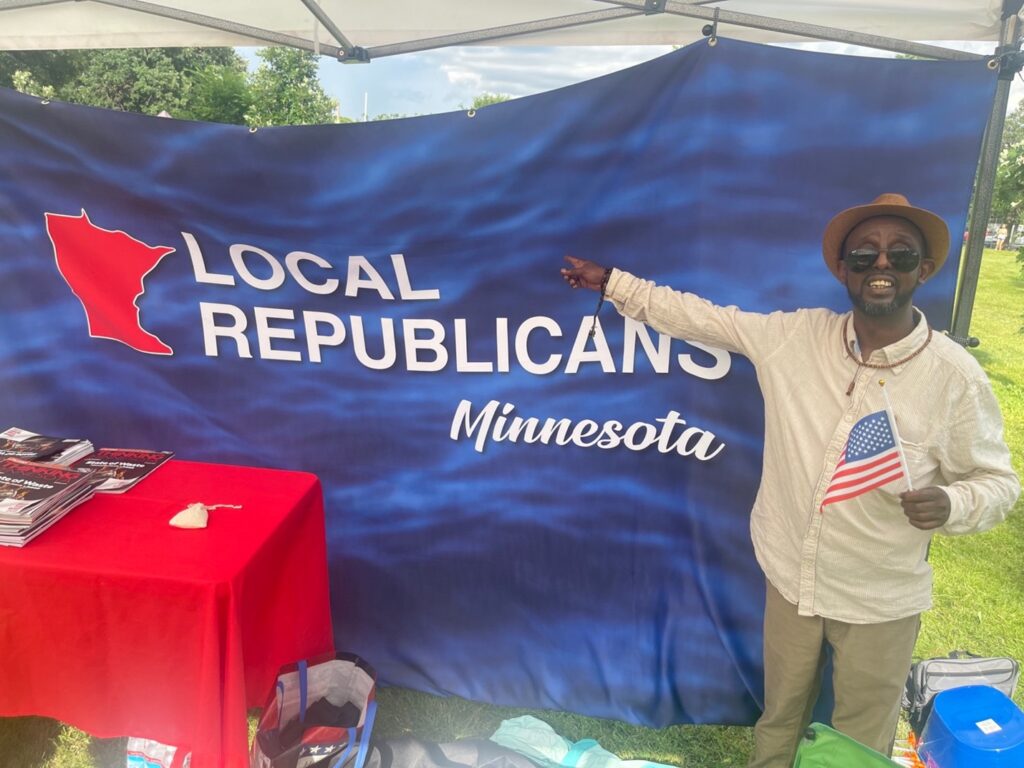
Faith in family, personal responsibility, and the promise of liberty have anchored my journey from childhood to activism—and they are also the bedrock of genuine conservatism. As a Somali, a minority, and a Muslim activist, I am consistently asked why I am a Republican, especially given the rhetoric directed at people like me. My answer is simple: my core values of family, responsibility, faith, and liberty connect deeply with conservative ideals. I remain in the party to challenge it to practice true inclusion and embody its founding principles. The future of the party rests on its ability to genuinely represent people like me, not just recite values.
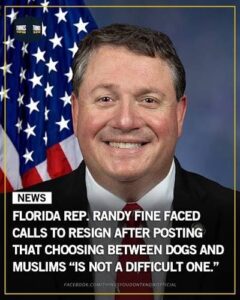
During Ramadan, divisive comments arose in Congress, but this is not just about rhetoric. According to the latest FBI report, anti-Muslim hate crimes increased by 22 percent over the past year, with dozens of new incidents reported during key religious observances. Against this backdrop, Congressman Randy Fine of Florida said he preferred a dog to a Muslim, while Congressman Randy Ogles argued Muslims do not belong in America and rejected pluralism. These remarks occur as U.S. relations with Muslim-majority countries continue to be at odds and anti-Muslim hate crimes rise. While not all Republicans share this talk, these trends threaten American Muslims and may escalate further.
Facing Criticism and the Question of Loyalty
When people criticize me for staying Republican, it only makes me more determined. Real change needs people like me, who live conservative values and work from the inside. The party is at a turning point. Ahead are two futures: One road leads to genuine inclusion, where the Republican Party welcomes people of all backgrounds, grows stronger through diversity, and rebuilds trust. The other road turns toward exclusion, where the party becomes smaller and isolated, defined by division, and loses touch with its founding principles. Our presence is needed to see whether the party will choose the path that lives up to its best ideals.
The GOP must decide: uphold Lincoln’s inclusive ideals or abandon them. Discontent with the left is real, but the greater threat is a turn toward exclusion on the right, which violates core Republican principles and undermines the party’s strength.
Minority voices must decide: withdraw or fight to shape the party. I urge action—begin by supporting inclusive candidates, then oppose exclusion wherever you encounter it, and ultimately work to advance anti-discrimination reforms within the party. Every step taken toward fairness strengthens the party’s original vision and safeguards its future.
Fears of Exclusion and Historical Similarities
What is the plan now? Deport people who are ‘brown and colored,’ even if they were born here? There are also white Muslims. Will there be internment like in 1942? (Rep. Ogles enrages colleagues with anti-Muslim post, 2026) Ideas like registries and bans remind us of that past. Even though we have made progress, new restrictions mean we must stay alert to avoid repeating old mistakes.
Congressman Fine’s statement about preferring dogs to Muslims represents increased discrimination. I think of my mother’s concern, the silence after mosque prayers, and neighbors avoiding eye contact. After Muslims, other groups could be targeted: Black people, Jews, Asians, and Catholics have faced this before.
History shows that any group can be targeted, and only certain wings of Protestant white communities feel secure. Even Christians differ among themselves; some uphold liberal values, while others back Christian nationalism—these are terms I dislike. For me, Christianity is faith, not politics, and using religion for power remains risky.
I am not criticizing Christianity itself, but how it is used for politics. I believe in shared values within the Muslim community as an advocate activist on the American way of life, and hope Christians do the same.
My Christian friends remind me, ‘Love your neighbor as yourself.’ These scriptures teach compassion and dignity, not exclusion or fear. When politicians use religion to divide, I remember our faiths encourage hospitality and justice. Islam and Christianity both value liberty, justice, and human dignity, which may help foster unity. I hope more leaders promote these ideals.
James Talarico from Texas calls for a compassionate Christianity that brings together Christians, Muslims, Jews, and people of color. He is a Democrat, but his message also resonates with independents and libertarians and challenges the Republican focus on faith-based politics. If purist rhetoric wins out, the party will lose supporters. With midterms coming, Republicans risk losing Muslims and people of color, including Catholic voters, to the Democrats. This could hurt their chances of winning elections and governing well. Lose inclusion, lose elections: this is the real risk facing the party if it ignores the warning signs.
Party Retreat and the Challenge of Inclusion
Approaching the Republican retreat, Republican People of Color warn that demonizing Muslims and fostering exclusion threaten the party’s integrity and America’s promise. By 2045, nonwhite Americans are projected to make up the majority of the electorate—a shift that will transform the political landscape and determine which parties remain viable. (Frey, 2018) If the GOP continues to turn away minority communities, it risks permanent losses at the ballot box and in national leadership. The GOP must decide: embrace inclusion, or continue on a path that betrays core ideals.
Why I Remain a Republican
As a Somali and an activist, I stay Republican because I believe in its founding ideals: Liberty, Opportunity, and Merit. One vivid moment that confirmed these ideals are not just slogans came during my first local GOP meeting. I expected wary glances or polite distance, but instead, an older party member approached me, asked about my family, and listened closely as I explained the challenges Muslim Americans face. He shared his own story and told me he joined the meeting that night to make sure newer voices, especially those from minority communities, felt welcome in the party his ancestors had helped build. In that conversation, Liberty meant being able to speak my truth, Opportunity was being invited to take a seat at the table, and Merit was knowing that my contributions were valued for what I brought, not in spite of who I am. Being Muslims, black, Somali, or immigrant was irrelevant; we were all proud Americans.
Allowing hate against Muslims shows there is a crisis, so my loyalty is to these principles and to holding the party accountable, especially for minorities.
My main reason for staying is to fight government abuse against any group, no matter their color, religion, or beliefs. Republicans have stood against this in the past, but now it is at risk. Every time a group is targeted—Muslims, Black activists, Latinos, or dissidents—it reminds us that freedom is in danger. I am committed to defending liberty for everyone.
Break the Silence—Lead in Public
Many Republicans reject hateful rhetoric in private, but most stay silent in public. I urge allies: make public statements, write letters to leaders, speak at town halls, and actively support inclusion and diverse candidates. Do not rely on passive support. The party’s future depends on public courage to uphold its real values.
The Struggle for the Party’s Soul
I support the party because of its ideals, but its values are challenged by internal division. When Republicans do not speak out against harmful rhetoric, it is like letting our flag stay furled instead of flying—what should unite and inspire remains hidden, and the party risks giving up its core values. I support inclusion because the party’s own principles require it.
I remain a Republican because I believe most party members are decent. Loud voices do not represent everyone. Divisive messages repel Muslim Americans, independents, people of color, and supporters of religious freedom.
Exclusion puts not only the Republican Party but the American promise itself at risk. The real challenge before us is a choice faced by all who believe in this country—commit to true inclusion or allow liberty and justice for all to be forsaken. We must remember that every American passport carries the inscription: ‘This passport is the property of the United States of America.’ That promise belongs to all of us, and we each share a patriotic duty to protect it. Whether Republican or not, our collective future depends on defending the ideals that make America unique and strong.
Some recent statements from Republican lawmakers have openly questioned the inclusion of Muslim Americans. America has a tradition of religious freedom. I urge Republicans and all Americans to contact their representatives, speak out publicly, challenge exclusion whenever they see it, and demand that leaders protect justice and liberty. Standing up for these ideals in public is crucial for America’s future. Silence is complicity; I choose voice.
References
(October 15, 2023). 2022 Hate Crime Statistics. The American Presidency Project. https://www.presidency.ucsb.edu/documents/statement-the-federal-bureau-investigation-report-hate-crime-statistics-for-2022
Jones, V. & Adams, L. (March 8, 2026). Ogles says Muslims ‘don’t belong’ in American society, calls for a ban. Yahoo News. https://www.yahoo.com/news/articles/ogles-says-muslims-dont-belong-200356294.html
(January 24, 2024). White House releases national strategy to combat Islamophobia. AP News. https://apnews.com/article/e0ec5d9c9bf01cc6e257f6add87e916f
(December 14, 2023). CAPAC Marks 80 Years Since the Chinese Exclusion Act was Repealed. Congressional Asian Pacific American Caucus. https://capac.house.gov/press-release/capac-marks-80-years-chinese-exclusion-act-was-repealed
Alfaro, M. (February 16, 2026). GOP congressman who says he supports dogs over Muslims faces calls to resign. The Washington Post. https://www.washingtonpost.com/politics/2026/02/17/randy-fine-muslims-dogs-resign/
(2024). History of Antisemitism in the United States. Wikipedia. https://en.wikipedia.org/wiki/History_of_antisemitism_in_the_United_States
Jr, Z. D. (February 15, 2021). White Evangelical Protestants Hold Divergent Religious Liberty and Discrimination Views. Good Faith Media. https://goodfaithmedia.org/white-evangelical-protestants-hold-divergent-religious-liberty-discrimination-views/
Notheis, A. (March 8, 2026). Talarico says he’s met non-Christians who ‘embody’ the Bible’s teachings better in a resurfaced clip. Washington Examiner. https://www.washingtonexaminer.com/news/entertainment/4485420/james-talarico-non-christians-bible-teachings-resurfaced-clip/
(March 8, 2026). Rep. Ogles enrages colleagues with anti-Muslim post. Axios. https://www.axios.com/2026/03/09/andy-ogles-muslim-post-democrats-republican-react
Frey, W. H. (March 13, 2018). The U.S. Will Become ‘Minority White’ in 2045, Census Projects. Brookings Institution. https://www.brookings.edu/articles/the-us-will-become-minority-white-in-2045-census-projects/