
We now live in a multipolar world.
- Articles
republipeclr
- 8
- 15 minutes read
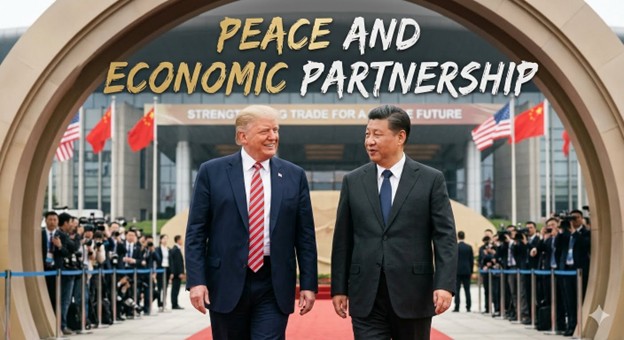
President Trump is visiting China to meet with Xi Jinping. Today, global politics revolves around these two leaders, showing that we have returned to a multipolar era. However, this shift is not limited to the United States and China; other major actors, such as the European Union, India, and Russia, also play significant roles in shaping the international landscape. The European Union has become an influential economic bloc and a key player in diplomatic negotiations, India is emerging as a global economic force with a rapidly growing population and technological sector, and Russia remains a critical power with strategic interests spanning multiple regions.
Still, it’s important to recognize the magnitude of American achievements and the unique role the United States has played in shaping this modern world. For decades, American leadership helped create a foundation for global prosperity and peace: rebuilding Europe through the Marshall Plan, defending allies and global trade routes, and standing up for the values of democracy and freedom. US commitment to open markets and support for international institutions fueled worldwide growth and stability, helping billions across nations rise out of poverty and conflict. American innovation, from space exploration to the digital revolution, has transformed lives everywhere, exemplifying the positive influence of US values and leadership.
This change began in 1975, when Henry Kissinger met with Chairman Mao to separate the interests of the USSR and China during Nixon’s presidency. Back then, China was still recovering from revolution and purges and was a poor country. Over time, under Deng Xiaoping, China opened up and focused on manufacturing, moving from a closed, communist socialist system to a more global, capitalist one. These efforts led to major growth in industry, technology, the military, and education. For instance, China’s GDP grew at an average annual rate of nearly 10 percent for several decades from the late 1970s, and between 1978 and 2020, over 800 million Chinese people were lifted out of poverty according to the World Bank. As a result, China became a global power through careful planning.
In the past 50 years, the United States has increased government regulation, which has influenced economic growth and everyday life. Studies show mixed effects: for example, research by the Organization for Economic Cooperation and Development (OECD) has found that excessive regulation can impede productivity growth and slow innovation, while a 2017 report from the U.S. Office of Management and Budget estimated the net benefits of major federal regulations from 2006 to 2016 were between $287 billion and $911 billion, due to improved consumer and environmental protections. Academic work, such as a 2013 paper in the Journal of Economic Literature by John Dawson and John Seater, also suggests that federal regulation in the US has slowed economic growth, though other scholars point out that appropriate regulation is necessary for consumer safety, environmental protection, and fair competition.
From a Republican People of color perspective, the growing web of regulations has weighed down American competitiveness in critical industries and added costs for entrepreneurs and workers alike. Republicans advocate policies to streamline regulations, reduce bureaucratic red tape, and allow American businesses to innovate and grow without unnecessary government interference. Proposals such as mandatory regulatory cost-benefit analysis, cutting outdated rules, and prioritizing local and private-sector solutions are central to the Republican approach. For instance, policies could include expanding deregulation initiatives in manufacturing and energy, limiting the reach of federal agencies over small businesses, and introducing stronger sunset provisions to ensure regulations are regularly reviewed and show their necessity. Republicans believe these actions would foster a more dynamic economy, make the US more competitive against rivals like China, and help restore opportunities for American workers.
Meanwhile, China encouraged its companies and citizens to invest at home, boosting its growth and global standing. With the zeal of yesteryear Americans, the Chinese Citizens aided by their government. went out into the world to trade, promote China and politics globally, while we, Americans, are under the “We the people” foreign travel advisory warnings everywhere.
At the same time, China faces its own set of challenges, such as concerns about government debt, demographic shifts, and environmental issues, which complicate its path forward. While the US spent resources on wars and protecting markets overseas, China built new trade routes and received help from markets the US helped secure. Take, for instance, the Belt and Road Initiative globally. Remaking the old Silk Road from Marco Polo days anew for our age to China’s benefit. This difference highlights a major shift: China is now a key player as the world moves toward a multipolar system.
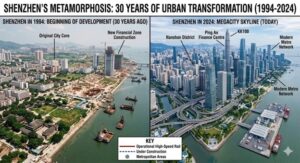
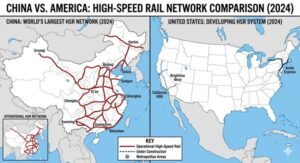
Today, Americans face increased competition in international markets where we once set the standard. Since the ‘end of Bolshevism communism Cold War history’ period, after the Soviet bloc fell and China became a major trading partner, the global landscape has changed. China has rapidly modernized and built an impressive infrastructure, including a high-speed rail network spanning over 40,000 kilometers that connects its major cities efficiently. America, by contrast, faces the challenge of aging transportation systems and a need for new investment. Yet, it would be a mistake to underestimate America’s enduring strengths and our remarkable capacity for renewal.
The United States continues to set the global pace in areas that matter most for the future. Our universities and research institutions are unmatched, attracting the brightest minds and pushing the boundaries of innovation. America leads the way in artificial intelligence, biotechnology, and advanced manufacturing, and our spirit of entrepreneurship keeps the US at the forefront of technological revolutions. Our economy is among the most dynamic and diverse in the world, home to many of the world’s leading companies. Americans have repeatedly risen to meet challenges throughout history, and with our talent, values, and determination, we have every reason to be confident that we will do so again. By drawing on our proven strengths and embracing smart investments at home, America is poised not just to adapt to the changing world but to continue leading it.
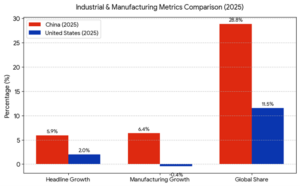
American leaders have different views on how to revive our industries. President Obama was unsure if we could reach past levels, while President Trump believes tariffs are important for staying competitive. The pandemic showed how much America relies on global supply chains and exposed weaknesses in the delivery of essential goods. Outsourcing for more profit has hurt American workers. However, globalization has also brought benefits to the United States, such as lower consumer prices, greater access to a wider variety of goods, and new markets for American companies. These gains have improved living standards and boosted some sectors of the US economy. Globalization, supported and protected by the US military, has mostly helped other countries, especially China, but it has also offered clear advantages to the US, making the true costs and benefits of being the sole leader more complex.
From a Republican People of Color perspective, there are clear policy proposals to meet these challenges. Republicans often favor cutting excessive regulations that make it harder for businesses to grow and compete, along with comprehensive tax reform that lets American workers and companies keep more of what they earn. America-first trade policies, including targeted tariffs, are intended to protect critical industries and prevent unfair competition from abroad. Republicans also advocate for stronger support for domestic manufacturing, including expanding incentives for companies that build factories at home and investing in apprenticeships and workforce training programs. Supply chain resilience is a top priority, and proposals include reshoring production across sectors such as pharmaceuticals, energy, and technology. Public-private partnerships, as well as trade agreement reforms that put American workers first and require trading partners to meet high standards, are central to Republican-backed solutions for a more secure and prosperous future. We, the people, need the good-paying union jobs and business from it all.
These actionable steps, together with continued investments in new technologies and a commitment to American innovation, can help the US adapt, evolve and thrive in this new era. Evolution is the process of change needed in America.
It is clear that we now live in a multipolar world. As Secretary of State, the venerable Marco Rubio, the meme guy with all the jobs, we all laugh at seriously points out, American dominance is being challenged by countries that can produce goods more cheaply because they have fewer restrictions at home. In the US, government bureaucracy makes innovation slower and raises costs. China has gained ground by building quickly and consistently, giving it advantages that the US has not matched. Now, Americans have to face a new reality in which China and other countries are setting more of the rules for trade, markets, and political ascendancy. The rise of the many means that if we do not evolve and adapt in time, we, the people, stand to lose even more of our standards of living. and the good-paying jobs and business in America for Americans on a global scale.
Throughout this analysis, we, the Republican People of color, approach these issues from a general American perspective, focusing on how these global shifts impact the US as a whole. While we appreciate that experiences vary across different communities and political groups, our goal here is to provide a broad view of these changes and their implications for the entire country.
The Trump-Xi meeting marks a major turning point, similar to the changes after World War II. Many Americans want to share the responsibility of keeping global markets secure, especially as China benefits from the current world order. The big question now is how the US and China will divide these global duties, as shown by the recent crisis in the Strait of Hormuz. If China wants to lead in a multipolar world, it should help protect trade routes. The US has carried this responsibility for a long time and should be open to sharing it. Americans want global trade that benefits everyone, not just big companies, and more investment at home. In this new era, much depends on the choices of these leaders.
Other countries and international organizations are also paying close attention to the evolving US-China relationship. For example, the European Union seeks to balance its economic interests with China against its security alliance with the US, and EU leaders often call for a rules-based international order that avoids a new Cold War. India aims to assert its own influence in Asia while cooperating with both Washington and Beijing when it suits its national interests. Russia, meanwhile, may use rising US-China competition to expand its own strategic options. International organizations such as the United Nations, the World Trade Organization, and the G20 increasingly serve as platforms for middle powers and smaller states to voice concerns about great-power rivalry and advocate for more inclusive multilateral solutions. Many countries are wary of being forced to choose sides and prefer pragmatic engagement with both economic giants.
Looking ahead, several scenarios could unfold: the US and China may cooperate and create shared leadership that brings stability to global markets; both sides might turn to rivalry, leading to increased tensions and competition for influence; or they could settle into a cautious partnership, working together on some issues while competing on others. Each scenario will have different implications for trade, security, and the everyday lives of people around the world. The multipolar world has arrived, and America needs to move from being the only superpower to being one of several, focusing more on domestic needs and encouraging others to take on leadership roles abroad. The reason is the $38 trillion in debt we, the people, are carrying around our necks as a nation, affecting our progress over the next 250 years. We don’t have the capacity to be all and do all like before. We are heading into insolvency as a nation, playing the role of a unipolar power in the world.
As Republican people of color Americans of diverse backgrounds, we stand united in our commitment to peace, prosperity, and the enduring values that have defined our nation for generations. We believe in finding common ground through commerce, mutual respect, and strong leadership on the world stage.
America has been a force for good over the past 80 years, helping usher in an era of unprecedented global growth and opportunity. As we face a pivotal moment in history, much like the turning points after World War II, we reaffirm our resolve to uphold our role as a leading democracy and champion of freedom. We will always compete vigorously in defense of our principles and remain steadfast in our determination to never settle for second best. Our confidence in the American spirit is unwavering, and we are ready to espouse, in narratives and works, the idea that we are still a free country, with citizenship and remain alive, and that we face the future in America with courage, unity, and optimism.
We ain’t going to second class anytime soon. Communist China must also clearly respect and understand that about us, we, the people of America. Our interests in America are permanent; our friends are not. Our American for ‘We the People’ is: peace, trade, access to resources, and some form of partnership based on mutual understanding when we can, and competition where we cannot. This applies to all, for the age of chaos will soon return to order. We prefer peace in it, and let’s all make bread and live to eat it too, for we the people want that. But if it is going back to the Cold War days, count us, we the people of democracy, against communism for the long haul. the American way of life, too! Be it foreign or domestic means of communism or its kissing cousin, socialism. We will always as Americans compete against it. We are capitalists and Free People Power driven societies of the world. That is what we always do as proudly democracy lovers. Democracy is a beautiful thing!
Now is the time to stand tall. Let us draw strength from our shared values, history, and the unbreakable spirit that has always defined America. As Republican People of color, as an immigrant, the natives taught us these values of we the people, irrespective of class, gender, sexuality, creed, nationality, or religion, we are committed to upholding our nation’s promise, protecting it, and seizing new opportunities for a better future. We will continue to fight for prosperity, freedom, and respect on the world stage. Well, as long as we remain free and alive to do so in America. Unmolested and unleashed to all our full potential by our governments in America, maybe even aided by our governments. Well, we can hope and dream, can’t we all?
No exclusion, no exception.
Reality is different, but we can always dream big in America, all of us. As big as our skies and the heavens. We should be those who go for the moon literally, and if we miss it, take the stars, until the day we turn to stardust and go back to the heavens. Inshallah. If God wills it, for in God we trust. Well, most of us in America. Those that don’t, we’re cool with it too. That is the American way of Life.
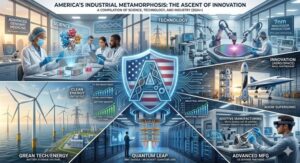
Together, let us espouse, build, innovate, and lead—not just for ourselves, but for future generations. The American spirit is unyielding, and our best days are still ahead. Let us move forward with confidence, unity, and the courage to shape the future as champions of liberty.
Welcome to the multipolar age, to the citizens of this planet.
We Americans are ready and fired up, well, we are some of us, more than others. Not too sure about the other side of the aisle, our brothers and sisters of the democrat party, be they progressives, socialists, or now some a few communists, who are for big government taking over our lives, overregulating, micro-managing, and controlling social engineering means galore of the tax-and-spend folks of America. That for sure means China becomes a unipolar world power if and when they come to power again. One of the big reasons is that, as immigrants who know what that means for us domestically, we are Republican People of color. So let’s go, elephants, the midterms are where we show up and maintain course in America. We are working hard on it if we are still free and alive in America. Against all odds.
Read more about it at www.rpoc.org
Heck, it is still a Free Country.
Even for them, as it should be for us too!
No exclusion, no exception.
Proudly, we are all Americans.
You just got to love America!



8 Comments
ketoconazole mechanism review
ketoconazole mechanism review
minoxidil foam vs liquid regrowth data
minoxidil foam vs liquid regrowth data
minoxidil onset pk link
minoxidil onset pk link
sildenafil PDE5 selectivity
sildenafil PDE5 selectivity
avanafil contraindication essentials
avanafil contraindication essentials
vardenafil vs sildenafil comparison review
vardenafil vs sildenafil comparison review
orlistat biochemical mechanism
orlistat biochemical mechanism
amoxicillin interaction guide
amoxicillin interaction guide
Comments are closed.