Rising living costs and economic concerns will likely drive voter decisions in the next election.
- Articles
republipeclr
- 0
- 11 minutes read
Voters across the country overwhelmingly say the rising cost of living is their number one concern. Steep increases in rent, groceries, gas, childcare, and bills have outpaced most paychecks, according to government data. (Financial Report of the United States Government, n.d.) Without credible relief, the cost of living will likely dominate the outcome of the next midterms.
Why It Feels So Tough
Let’s start with food. Official USDA numbers say a family of four spends about $1,000–$1,300 a month on basic groceries for meals cooked at home. (USDA Food Plans: Monthly Cost of Food Reports, 2026) This doesn’t include eating out or fancy food. When inflation slows, prices usually don’t drop—they just stop going up so fast.

Housing is even tougher. Government rent estimates show that in many areas, a basic two-bedroom apartment costs $1,200 to $1,800 a month or more. (U.S. Census Bureau QuickFacts: United States, 2024) These prices can be much higher in big cities or coastal areas, while smaller towns or rural places might be cheaper. This wide range means families across the country feel the housing pressure differently, but for most, it’s their biggest expense and affects what they can spend on everything else.
Next is transportation and energy. In spring 2026, gas costs about $3.50 per gallon. If you drive around 1,000 miles a month, that means $120–$180 just for gas, not including car payments or repairs. (Gas Prices Hit Records in 2026: State by State Breakdown, 2026) In places without good public transportation, getting to work can feel like paying a second rent.
On the income side, the federal minimum wage is still $7.25 an hour—about $15,080 a year for full-time work. (Minimum Wage, 2024) But just covering basic needs usually costs a lot more. Even people making the average wage can have a hard time, especially in costly areas.
Why People Are Still Worried Even if Inflation Slows
Even as inflation slows, prices usually remain high.
High housing costs weigh on budgets. When rents stay high, people don’t believe the economy is improving, even if reports say otherwise. Many just get by, stressed about emergencies or unexpected bills.
Job Worries and the Impact of AI
People also feel uncertain about their jobs and futures, especially as AI systems increasingly replace specific tasks that humans once performed in entry-level roles such as clerical work or customer support. For example, in banks and call centers, chatbots now perform many routine customer service tasks. Instead of eliminating entire roles, AI often reduces the number of jobs or changes job responsibilities, requiring workers to learn new skills or adjust to new tasks. Even though there are no official statistics on how many roles AI has changed or replaced, the visible shift toward automation makes many workers feel less secure about keeping their current jobs or future employment options. (Manning & Aguirre, 2026)
Still, workers can take steps to adapt and strengthen their job security as these changes unfold. Learning new digital skills, such as basic coding, data entry, or customer service software, can improve your value in the job market. Some community colleges and online platforms offer free or low-cost courses on technology, communication, or project management. Joining workshops or training programs to boost digital literacy, explore roles in tech support, or get certifications in fields with growing demand, like healthcare, logistics, or skilled trades, can help you transition to new opportunities. Staying adaptive, keeping your head swiveling toward upskilling, and being willing to learn will help workers stay ahead as AI continues to shape the workplace.
When people aren’t sure if their pay will keep up or if their job is safe, they spend less and avoid risks. This carefulness stays, even when the economy is growing.
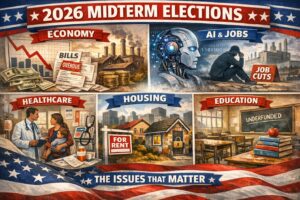
Why This Could Decide the Next Midterm Elections
The central question for midterm voters is simple: “Is my life more affordable now than before?” Because the cost of living affects every household, it is set to be the defining issue of this election.
People notice higher prices, and if pay doesn’t keep up, frustration follows at the polls.
The crucial question is whether leaders can show real progress on affordability before the election. Lower inflation numbers are insufficient; voters demand tangible relief in everyday costs. Without visible action—such as expanding rental assistance, capping rent increases, offering grocery relief checks, pausing gas taxes, or raising the Earned Income Tax Credit—the cost of living will be the definitive issue by which political leaders are judged. For Republican policymakers, several market-driven solutions can address these concerns while aligning with party principles. Options include reducing or streamlining regulations that add to housing and energy costs, providing targeted tax relief for working families, offering incentives for private-sector development of affordable housing, and temporarily suspending certain taxes, such as the federal gas tax. Encouraging competition in key sectors can also help lower prices. By promoting these Republican-favored approaches, leaders can deliver practical relief while staying true to conservative values.
What Real Solutions Would Look Like
From the voter’s view, fixing this means:
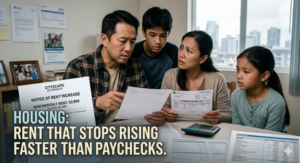
- Housing: Rent that stops rising faster than paychecks.
- Essentials: Groceries and basics that fit into the budget without constant sacrifice.
- Stability: No big surprises or spikes in gas or energy costs.
- Good jobs: Wages rising at the bottom, and clear paths to reliable work, even as AI changes the job market.
People worry when wages don’t keep up with costs. If jobs feel unsafe or paychecks fall short, anxiety grows. While solutions often depend on policy and leaders, families can focus on key expenses to save. Local food banks, community programs, or job training offer practical help. For example, “community fridge” initiatives in several cities provide free fresh food, and in Portland, partnerships helped distribute meals to thousands during tough months. Programs like these show neighbors can make a difference, even as broader policy changes are slow. Learning new skills or seeking roles in healthcare, tech, or trades may improve job security.
Republican policymakers at the state and federal levels can help expand these effective community efforts by providing grants, supporting public-private partnerships, or making it easier for local organizations to access resources. By scaling up or removing barriers for such programs, leaders can help families in more areas, deepen the impact, and show that policy can support local action that works. Policy matters only if people feel relief; otherwise, voters seek leaders with real answers.
The federal government, including the House, Senate, and presidency, is in Republican hands. Historically, midterms pose a challenge for the party in power. Right now, economic worries are front and center, especially for Republican People of Color like us. If these issues continue leading up to the midterms, no amount of messaging can outweigh what voters feel in their wallets. Americans want real results, not promises. Unless leaders deliver solutions that help everyday people improve their lives, voters will demand change at the ballot box. Even without factoring in healthcare costs, economic fears run deep for our communities and all Americans.
To show urgency and address these concerns, Republican leaders should act quickly by fast-tracking bills that provide direct relief. Immediate steps could include advancing legislation to cap annual rent increases, expand the Earned Income Tax Credit, and deliver temporary grocery or gas rebates to families most affected by rising prices. Leaders can prioritize removing barriers for local organizations distributing food and job training, pass emergency grants for community support programs, and create a bipartisan task force focused on affordability solutions. By advancing these concrete actions in the coming weeks, Republicans can demonstrate they are serious about delivering real help where it is needed most.
In this midterm election, concrete relief on everyday costs—not rhetoric—will define voter loyalty. Republican leaders face an urgent six-month deadline to deliver substantive results. With gridlock and partisanship at historic highs and a narrow House and Senate majority, Republicans risk heavy losses if they cannot show voters real economic improvement. Action to overcome the deadlock is essential, as American wallets will cast the decisive votes.
To break gridlock, leaders should consider forming bipartisan working groups focused solely on cost-of-living solutions. Incumbent Democrats stand to lose seats, too; it is in their interest to use discharge petitions to force key economic relief bills onto the floor and pair them with widely supported bipartisan provisions. Regular cross-party town halls and joint press conferences can also help create public momentum for action. Another approach is to fast-track smaller, targeted bills—instead of waiting for a single large package—to secure immediate wins on groceries, rent, or gas relief. By proactively seeking input from moderate members of both parties and inviting outside experts or community leaders to brief lawmakers together, Republicans can show genuine openness and rally broader support. These practical steps help move legislation forward, demonstrating that leaders are willing to do the necessary work to deliver results despite a challenging political environment.
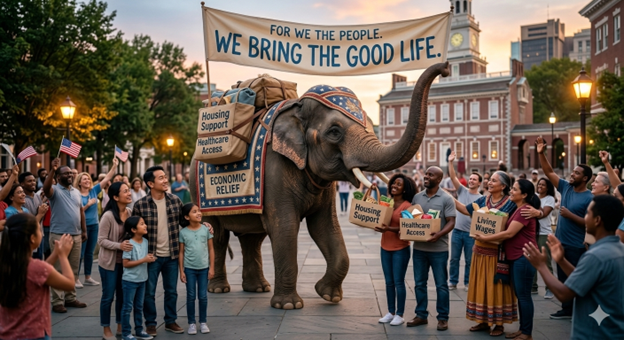
We at Republican People of Color join the chorus of shouting, the bills are too high for we the people!
We the People deserve the good life. The American Dream, all of us, no exception, no exclusion. Deliver, and Republicans stand a very good chance in the midterms.
Let’s Go Elephants!
Give us a platform of works delivered, and we can proudly run with to get folks elected nationwide, inshallah. Otherwise, we are running on vapes and feel-good messaging when the bills are too damn high!
That is the hardest political sell: winning voters who are going broke, in numbers like during the pandemic of shutdown-induced brokenness. The bills are just too high, and we the people, have cut back to bare bones now. We are in the poor, working, and middle-class Americans, heck, even upper-class ones, complaining now.
References
(n.d.). Financial Report of the United States Government. https://www.fiscal.treasury.gov/reports-statements/financial-report/government-financial-position-and-condition.html
(2026). USDA Food Plans: Monthly Cost of Food Reports. USDA Food and Nutrition Service. https://www.fns.usda.gov/research/cnpp/usda-food-plans/cost-food-monthly-reports
(2024). U.S. Census Bureau QuickFacts: United States. U.S. Census Bureau. https://www.census.gov/quickfacts/geo/chart/US/HSG860218
(March 31, 2026). Gas Prices Hit Records in 2026: State by State Breakdown. SmartAsset. https://smartasset.com/data-studies/gas-prices-spring-2026
(2024). Minimum Wage. U.S. Department of Labor. https://www.dol.gov/general/topic/wages/minimumwage?lang=en
Manning, S. J. & Aguirre, T. (2026). How Adaptable Are American Workers to AI-Induced Job Displacement?. NBER Working Paper No. w34705. https://doi.org/10.3386/w34705
(n.d.). About PDXFOOD.ORG. PDXFOOD.ORG. https://pdxfood.org/about.html
(December 29, 2024). The 118th Congress passed the fewest bills in decades. Axios. https://www.axios.com/2024/12/30/congress-118th-passed-fewest-laws