
HONORING FALLEN OFFICERS: End-of-watch Memorial in 2026.
- Articles
republipeclr
- 8
- 10 minutes read
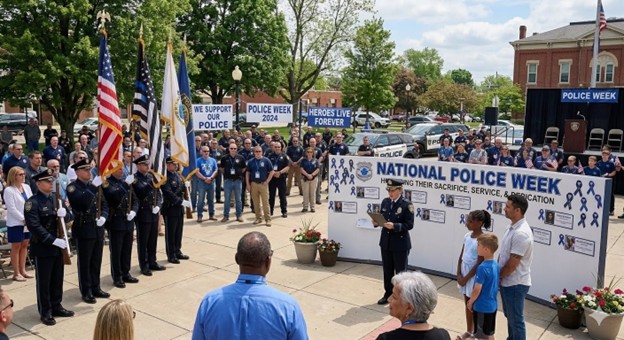
Police Week just ended, giving us a moment to honor officers who served. End-of-Watch memorials remind us of our duty to remember those who gave the ultimate sacrifice. These ceremonies highlight community unity and reinforce our dedication to service.
Law enforcement officers remain essential in our communities. In 2025, 53 officers were killed in felonious incidents nationwide, which is fewer than in previous years. The National Law Enforcement Officers Memorial Fund reported 111 total line-of-duty deaths, a number not seen since 1943. These figures indicate national progress but also highlight the impact of each loss on families and neighborhoods. For urban communities of color, this progress means not only fewer funerals for fallen officers but also the chance to build stronger bonds between police and residents. Safer streets help local businesses thrive, kids feel secure going to school, and families have more trust in those sworn to protect them. In our area, fewer tragedies allow officers to spend more time on neighborhood outreach, giving everyone a bigger voice in how safety is maintained.
These are some of the key statistics from 2025:
• Felonious killings: The FBI reported that 53 officers lost their lives in felonious incidents, most of them from gunshot wounds.
• Overall Line of Duty Deaths: Fatalities dropped by 25%, from 148 in 2024 to 111 in 2025.
• Officers Shot: The Fraternal Order of Police reported that 347 officers were shot on duty, and 45 died.
• Ambush Attacks: There were 67 ambush-style attacks, resulting in 90 officers shot and 22 deaths.
• Regional Breakdown: Most line-of-duty deaths occurred in the South.
I am in Washington, DC, and spoke with two families attending Police Week events. One family was from New Jersey; a beautiful couple whose son ended his watch in Maryland. Another was the son of a policeman from Tulsa, Oklahoma, who died in the line of duty and is himself an officer in Tulsa. The bike rides commemorated officers whose names were added this year. These officers died in the line of duty, and their service to the public is noted.
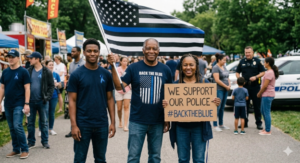
Seeing these families provides a reminder of the impact that similar losses have had in Minnesota communities. In DC, officer deaths in the line of duty have also resulted in visible support from neighbors, local leaders, and families. Community vigils and Police Week activities offer opportunities to bring people together, remember fallen officers, and show a commitment to public safety that connects people across the country. These national stories highlight experiences that resemble those found in local neighborhoods.
Policing has experienced obstacles since George Floyd’s death in 2020 and the subsequent protests. The “defund the police” movement sought changes in police work, especially regarding race and community relations. While different political groups have supported or questioned these changes, many of us—with diverse backgrounds and viewpoints—are deeply committed to both public safety and ongoing reform. As a Black American, I recognize the concerns that persist around racialized policing. Historically, officers’ names are derivatives traced back to slave overseers. While the system has minor flaws, progress over 250 years has come a long way, as evidenced by police diversity growing, as shown by organizations like the Somali American Police Association, which includes members from across America. Together, we can continue to foster progress by embracing shared goals for fairness, safety, and respect in our communities.
At the same time, we know community members have varied experiences and opinions about police and reform. Some strongly support current models; others call for major changes or new safety approaches, concerned about accountability, excessive force, or impacts on marginalized groups. Solutions include more transparency, better training, mental health resources, and investing in community programs. These discussions reflect a shared desire for safer, fairer communities.
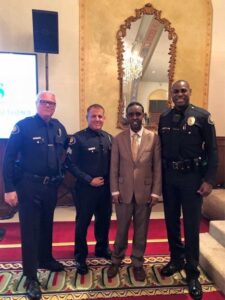
LOS ANGELES, CALIFORNIA
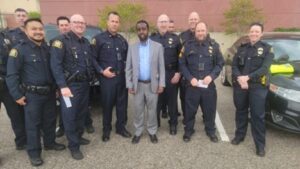
SAINT PAUL, MINNESOTA
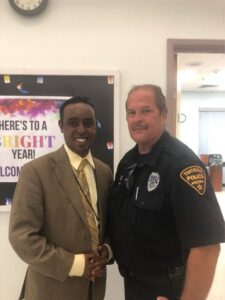
TUCSON, ARIZONA
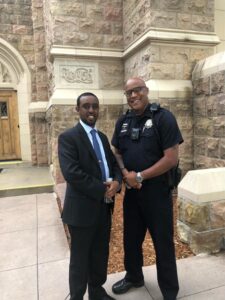
DENVER, COLORADO
Most of the officers come from the communities they serve and are viewed as public servants. When speaking with officers, their main concern is safe return home, followed by public safety. Officers often meet people during difficult times, forming public opinion. Departments now face staff shortages. Some believe fewer police allow investment in new approaches, like violence interrupters, an idea that gained popularity after George Floyd’s death. Limited resources meant fewer officers on duty in some cities, affecting crime response. Mental illness additionally complicates police work as officers handle crises related to substance abuse, straining city budgets.
Supporting law enforcement is a bipartisan topic. Some question whether this support ensures fair treatment for people of color or those with less money. As Republicans from communities of color, we believe that supporting police can coexist with strong community relationships. Policymakers must address pressures like mental health crises and homelessness. This is a winning issue as Republican activists share these ideas in urban centers. Engage openly; communities of color will appreciate you, and crime is a major concern for our neighborhoods. Please focus on helping families without stable housing. Economic opportunities and mental health programs can help. Whether to fully fund departments is still debated. Since 2024, crime rates have dropped. Police remain essential to public safety. Fully funding Police is a no brainer for any municipality if concern is crime and livable standards for all, no exception no exclusion of any. None of us calls anybody but 911 and the police when in trouble. We need them fully staffed to be ready to protect and serve us all. This is a winning issue for the republican party among people of color take it from grassroots of the The Republican people of color.
Activists and community members can take specific steps to support both police and community needs. Advocate for increased funding for mental health services and substance abuse programs to help reduce the burdens on officers and communities alike. Organize neighborhood forums and dialogues that bring together police, residents, and local leaders to discuss safety challenges and build mutual understanding. Support youth outreach and mentorship programs that connect officers with young people. Encourage local governments to invest in crisis intervention training and non-police response teams for mental health emergencies. Partner with churches, mosques, synagogues, temples, civic groupings, businesses, and schools to provide resources and safe spaces for vulnerable families. By working together on these concrete actions, we can strengthen public safety and build trust across our neighborhoods.
Everyone can help build safer neighborhoods and stronger police-community relations. In Washington, DC, residents can attend the Metropolitan Police Department’s Community Participation Academy for insight into police work and local issues. Community watch programs and youth groups like the DC Police Foundation offer mentoring and host dialogues. Support change by joining local advisory neighborhood commissions, giving feedback to the city council or working with police at events like National Night Out. Each MPD precinct has a Community Outreach Liaison available for residents. Police are committed to collaborative solutions, not just to criminalization.
In urban neighborhoods across the country, many programs focus on building better relationships between police and communities of color. For example, Minneapolis’ Next Step program helps reduce violence by connecting youth and families affected by trauma with mentors, job training, and support from hospital responders who reflect the community. Chicago’s CAPS (Community Policing) initiative has built trust in many Black and Latino neighborhoods by creating regular forums for residents and officers to discuss local issues and develop shared solutions. In New York City, the NYPD Neighborhood Policing program assigns officers to specific blocks, encouraging consistent interaction with residents and giving families more direct voices in setting community safety priorities. These urban efforts provide practical opportunities for people to engage, resolve concerns, and see positive change right where they live.
As a social activist in Greater Minnesota, I have worked on initiatives such as these. This is about safety and peace with our police, not politics. It’s neither a Democrat nor a Republican issue. This is the American way for everyone. We espouse for all, no exception, no exclusion of any.
There is no social justice that does not include our Police.
Building trust fosters better local government relationships. Sharing concerns respectfully, seeking solutions together, and joining police-led workshops on safety or mental health all help increase understanding. Simple acts like thanking officers or checking on neighbors foster goodwill. Staying engaged supports public safety while ensuring accountability and fairness.
Our message supports law enforcement and uplifts communities of color, showing that these goals can coexist. Public safety is strongest when police and the community work together. In 2025, 53 of the officers did not return home, a record low. We must continue to reduce officer and public deaths in 2026 and beyond. Progress requires cooperation among dwellers, leaders and officers with a focus on trust, transparency and accountability. By listening and collaborating we create a safer, just future. Today, we honor both policing and community efforts towards safety and unity.

At the Republican People of Color, we salute our Police, Five-O, POPO, Boys and Girls in Blue. We recognize and appreciate the dedication of law enforcement officers across our nation. Supporting those who serve and building bridges between communities and police are values shared by Americans from all backgrounds. Well, most of us, with a common-sense understanding, still believe we need the law for order in America. Period.
Salute to the police and blessings on you all for duty, protection, and service.
We at Republican People of Color honor you today and always.
May you all and we the people be safe for our living standard to improve for all, no exclusion, no exception.
Free People Power!
The American way of Life.

8 Comments
toradol key facts
toradol key facts
vardenafil 10 mg information
vardenafil 10 mg information
avanafil mechanism science
avanafil mechanism science
vardenafil effect on cavernosal tissue
vardenafil effect on cavernosal tissue
otitis media ear infection
otitis media ear infection
amoxicillin safety concerns
amoxicillin safety concerns
Slow Onset Explanations
Slow Onset Explanations
Absorption Variability Guide
Absorption Variability Guide
Comments are closed.