Political Breakups: The Divide Is Real and a Threat to Democracy and Citizenship
- Articles
republipeclr
- 8
- 11 minutes read
Political Breakups: The Divide Is Real and a Threat to Democracy and Citizenship
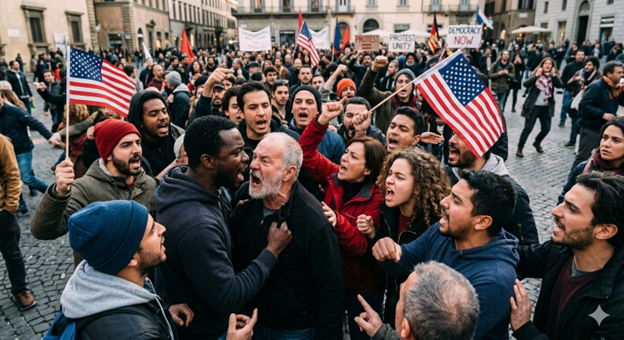
Political divisions in America are increasingly affecting daily life. These splits go beyond debates and elections. They now influence families, friendships, workplaces, and faith communities. Researchers call these ruptures “political breakups.” These breakups weaken civic culture and threaten democracy. (Gungor & Ditto, 2026)
Key Study Findings
Some think conservatives are mostly to blame for this trend, but the facts tell a different story. (Kubin & Sikorski, 2021) A survey from UC Irvine’s School of Social Ecology in April 2025 found that 47% of Democrats reported a political breakup, compared with only 29% of Republicans. Independents were in the middle at 39%.
The study also found Democrats were more likely than Republicans to start a breakup. This suggests some groups feel the divide more strongly. (Media Polarization – Research and data from Pew Research Center, 2026) However, the reasons for ending relationships over politics are complex. People may want to protect their well-being, set boundaries, or respond to past hurt. Not all political breakups come from hostility or lead to deeper division. Sometimes ending a relationship is self-care, not an attempt to make things worse.
Personal stories make these statistics real. For instance, a young progressive woman in California described distancing herself from a parent whose political beliefs made family gatherings tense and stressful, while a conservative father in Texas recalled losing contact with a close friend after a heated election debate. An independent voter in Ohio shared that she felt caught between both sides and was left out of social circles after revealing her views. These varied experiences highlight that political breakups happen across backgrounds and identities. Recognizing these complexities helps us respond with more empathy and understanding.
Of those who experienced a political split, 66% of Democrats reported ending the relationship, compared to 27% of Republicans. The survey also revealed that people who had political breakups often felt stronger hostility toward political opponents than toward those who agreed with them, even after adjusting for political group identification. (Kingzette, 2020)
Broader Social and Media Impact
Political breakups are part of a larger national challenge. The country faces an isolation crisis. Media coverage often escalates tensions by encouraging outrage, labeling, and harsh judgment (Flamino et al., 2023). Members of the Republican People of Color note that political leaders, commentators, and online discussions deepen this divide by portraying disagreement as a moral failing or threat, rather than as a normal part of public life.
One way to respond to media-driven outrage is to deliberately seek out news from varied perspectives, rather than just one. Avoid living in an information bubble that keeps you in a single mode of thinking. Additionally, pausing and reflecting before reacting to stories or debates online can help lower emotions and encourage more thoughtful conversation. Small steps like these can help reduce polarization and build understanding within our own circles.
Some practical tips for media literacy include: checking the source and author of a news story, looking for evidence or data that supports claims, comparing how different outlets cover the same issue, and noticing if headlines use dramatic language to create a strong emotional response. If a story makes you feel angry or fearful, consider why, and look for other perspectives to get a fuller picture. By developing these habits, readers can become more informed, recognize bias, and take greater responsibility for the information they share. Every outlet has bias, including this essay and author, why should you buy into theirs as thinking? Then use that to break up family, friends, associates, even romance. That makes you a fool!
A sucker for real!
This challenge is visible in debates over media trust and political representation. Many Americans now live in information bubbles. There is unprecedented distrust in the press. (Darr & Harman, 2024) When sources are distrusted, political disagreements feel more personal. This leads to suspicion and makes compromise harder. (Lin et al., 2021)
For members of the Republican People of Color, these issues are a daily concern with real effects on belonging, opportunity, and participation in public life. (Mundy, 2025)
Institutional and Personal Examples
This concern is not just about social relationships; it also affects public institutions. Republican People of Color cites a report from America First Policy, which claims that 95% of career federal employees who emailed about politics at work expressed liberal views and hostility toward Republicans. (Sagert, 2025) This example shows that ideological imbalance could shape the culture of government workplaces.
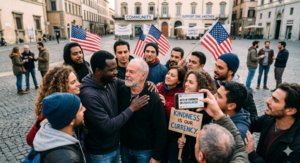
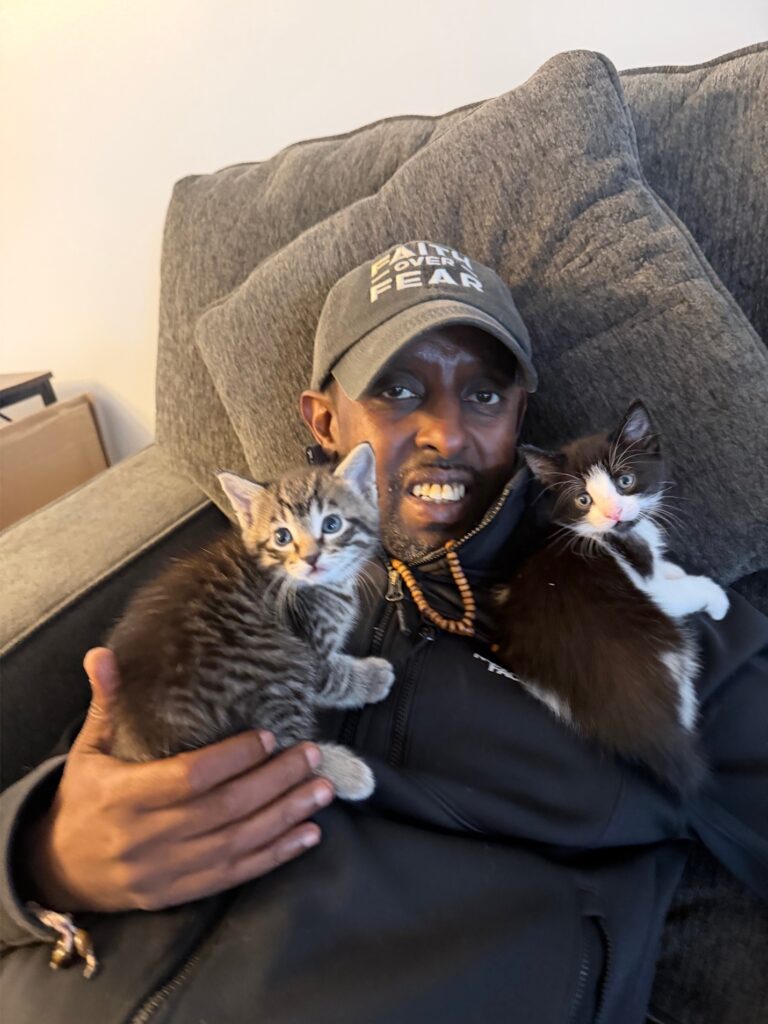
This essay shares Mohamed Ahmed’s account as a Black, Muslim immigrant and activist. Ahmed, a Republican People of Color founding member, faced exclusion in work and public life due to his political identity. Mohamed Ahmed describes being denied opportunities and acceptance in many institutions, including negative incidents perpetrated as psyops and other extracurricular activities by the FBI covertly through various means still ongoing today in America. It is what it is.

Ahmed uses his story to highlight the challenges faced by those with dissenting or nonconforming political views in the U.S. (Suiter & Fletcher, 2020, pp. 799-818). For more details, download his free book, ‘Dissidence in America,’ at www.rpoc.org . This is peaceful, nonviolent resistance to injustice in America. The American way of life, for some of us, is thanks to institutional bias. Baked in permanently into our relationships in America. Peace is the way, and resist we shall, with allies, friends, and partners, for the cause of Free People Power unmitigated in America for all, no exclusion, no exception to any of us for political and ideological differences, not from our venerable government agencies.
Conclusion and Call to Act
If these trends continue, we risk not only frustration but real harm to our democracy. (Kubin & Sikorski, 2021, pp. 188-206) A constitutional republic depends on equality, civic cooperation, and citizens’ ability to share institutions despite disagreement. When Americans treat political differences as grounds for ending relationships, we risk turning disagreements into lasting harm. (Güngör & Ditto, 2026) Now is the time for each of us to foster civil conversation. We should prioritize relationships over politics. Take responsibility for repairing and strengthening civic ties. Protect democracy: seek understanding, show humility, and stay involved with your community, especially when you disagree. Commit today to being a force for unity and respect. Encourage others to do the same. Learn to agree to disagree and still keep relationships going.
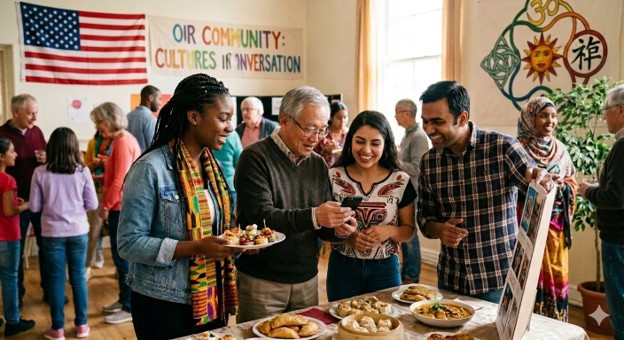
To start making a difference, consider a range of simple actions you can take in everyday life. Invite someone with different political views to coffee and listen to their perspective. Attend a local civic meeting or volunteer event to connect with people outside your usual circle. Join an organization that fosters civil dialogue in your community. You might also participate in an online forum or social media group where diverse viewpoints are discussed respectfully or suggest a book for your book club that explores multiple political perspectives. Volunteer to help with a community project that brings together people from various backgrounds. Even small gestures, like sharing a meal or reaching out in a group chat to bridge differences, can have a positive impact. The more options you try, the easier it becomes to start conversations and build stronger, more understanding relationships across divides.
No single leader or administration can fix this problem alone. We need a renewed civic spirit. We also need a willingness to disagree without dehumanizing one another, and a shared commitment to build our country together. The message from Republican People of Color is simple. Americans do not have to agree on everything to keep the nation strong, but we need a shared purpose, self-control, and respect. We urge you to act now: reach out to someone with a different perspective, listen, be civil, and take meaningful action in your community to rebuild trust. As the nation’s 250th anniversary approaches, let us celebrate our differences. Together, commit to bridging divides for the future of American democracy.
Imagine a country where our disagreements lead to creative solutions, where respect triumphs over suspicion, and where our diverse voices work together for the common good. By coming together in this spirit, we can ensure that democracy thrives for generations to come. The work of unity and understanding is not just necessary, it is possible. Let us look ahead with hope and resolve, confident in our shared commitment to a stronger and more united America.
This is Free People Power at work in America. We, as Republican People of color, dream of and espouse learning to agree to disagree and live and let live others’ political opinions.
America is still a FREE COUNTRY.
We shall all see, shall we not?
God bless America, that means we the People, all of us, no exception, no exclusion, E Pluribus Unum, out of many one, and let’s heal our divides and stop being a sucker for “political breakups.”
Don’t be that fool, Americans.
References
Gungor, M. & Ditto, P. (2026). Political breakups: Interpersonal consequences of polarization. PNAS Nexus. https://doi.org/10.1093/pnasnexus/pgag067
Kubin, E. & Sikorski, C. v. (2021). The Role of (Social) Media in Political Polarization: A Systematic Review. Annals of the International Communication Association 45(3). https://doi.org/10.1080/23808985.2021.1976070
(2026). Media Polarization – Research and data from Pew Research Center. Pew Research Center. https://www.pewresearch.org/topic/news-habits-media/media-society/politics-media-1/media-polarization/
Kingzette, J. (2020). Who Do You Loathe? Feelings toward Politicians vs. Ordinary People in the Opposing Party. Journal of Experimental Political Science. https://doi.org/10.1017/xps.2020.6
Flamino, J., Galeazzi, A., Feldman, S., Macy, M. W., Cross, B., Zhou, Z., Serafino, M., Bovet, A., Makse, H. A. & Szymanski, B. K. (2023). Political polarization of news media and influencers on Twitter in the 2016 and 2020 US presidential elections. Nature Human Behavior 7. https://doi.org/10.1038/s41562-023-01550-8
Darr, J. P. & Harman, M. (2024). Leaving a Legacy: Shifting Media Use and American Democratic Attitudes. Political Behavior 47. https://doi.org/10.1007/s11109-024-09992-0
Lin, H., Wang, Y., Lee, J. & Kim, Y. (2021). The effects of disagreement and unfriending on political polarization: a moderated-mediation model of cross-cutting discussion on affective polarization via unfriending contingent upon exposure to incivility. Journal of Computer-Mediated Communication 28(4). https://doi.org/10.1093/jcmc/zmad022
Mundy, R. (2025). A Bigger Tent? Nonwhite Republican Candidates and Their Uphill Paths to Office. Political Research Quarterly 78(2). https://doi.org/10.1177/10659129251320967
Sagert, J. (2025). EXECUTIVE SUMMARY: 95% of Career Federal Employees Who E-mail About Politics at Work Express Liberal Views. America First Policy Institute. https://www.americafirstpolicy.com/issues/95-of-career-federal-employees-who-e-mail-about-politics-at-work-express-liberal-views
Suiter, J. & Fletcher, R. (2020). Polarization and partisanship: Key drivers of distrust in media old and new?. Media 35(5), pp. 799-818. https://doi.org/10.1177/0267323120903685
Kubin, E. & Sikorski, C. v. (2021). The role of (social) media in political polarization: a systematic review. Annals of the International Communication Association 45(3), pp. 188-206. https://doi.org/10.1080/23808985.2021.1976070
Güngör, M. & Ditto, P. (May 6, 2026). New study finds an increase in ‘political breakups’. University of California. https://www.universityofcalifornia.edu/news/new-study-finds-increase-political-breakups

8 Comments
hello world
hello world
ivermectin systemic kinetics
ivermectin systemic kinetics
vardenafil kidney disease contraindications
vardenafil kidney disease contraindications
avanafil digital safety notes
avanafil digital safety notes
avanafil reaction breakdown
avanafil reaction breakdown
medical reviewer
medical reviewer
bronchitis bacterial infection
bronchitis bacterial infection
Sildenafil vs vardenafil variability
Sildenafil vs vardenafil variability
Comments are closed.