
Abraham Accords Roadmap
- Articles
republipeclr
- 10
- 10 minutes read
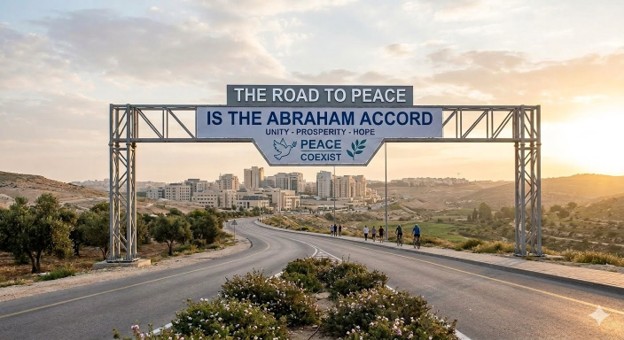
The Road to Peace in the Middle East: Abraham Accords
The Abraham Accords are a major diplomatic step toward building peace between Israel and Muslim and Arab countries. They are named after Abraham, a figure important to Christianity, Islam, and Judaism, to show the hope for interfaith and regional unity.
The Abraham Accords are important agreements, led by the United States, that normalized relations between Israel and several Arab and Muslim-majority countries. In diplomatic terms, normalizing relations means that countries agree to have official ties, such as opening embassies, starting direct flights, and allowing trade and cooperation across different areas. Normalization matters because it not only creates official connections between governments but also opens up opportunities for people from different countries to travel, do business, and collaborate in ways that were not possible before. These changes can improve daily life by increasing economic opportunities, boosting tourism, and creating new educational and cultural exchanges. For American communities, including Republican people of color, these agreements can lead to more business opportunities, new jobs connected to trade and technology, and strengthened security cooperation that can help keep our country safer. A more peaceful Middle East can also lower energy prices and make the world more stable, which benefits families and businesses across the United States.
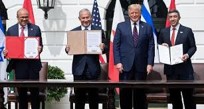
The Abraham Accords were first signed at the White House by the Trump administration on September 15, 2020. Before the Abraham Accords, there were only two major peace agreements between Israel and its neighbors: the Israel-Egypt peace treaty in 1979 and the Israel-Jordan peace treaty in 1994. The Oslo Accords, signed in the 1990s, also aimed to promote peace between Israel and the Palestinians, though with limited results. This was the first time since 1994 that Israel made such agreements with Arab countries. The name Abraham was chosen because he is an ancestor in Christianity, Judaism and Islam, showing the hope for regional unity.
To understand why the Abraham Accords matter, it helps to know the Middle East has faced conflict for thousands of years. These agreements offer a new way to seek peace in a region shaped by long histories and many different stories. Social media and modern news often miss these deeper issues, so it is important to see why a new approach like the Abraham Accords is needed.
The Abraham Accords were first launched as a major diplomatic effort by the Trump administration to promote peace and reduce conflict in the Middle East. Importantly, both Republican and Democratic administrations have supported the Accords, underscored a sense of national unity and demonstrating that the United States is committed to sustained leadership in the region, regardless of which party is in the White House. Because of old rivalries, making peace is difficult but important. So far, four countries have formalized agreements with Israel: the United Arab Emirates, Bahrain, Morocco, and Sudan. Other countries, such as Saudi Arabia and Oman, are considering joining in the future. People are still debating if this process can keep going while there are still wars and unrest in the region. We at the Republican people of color believe even amid war we should work for peace. Peace through strength.
The main challenge is getting more Muslim and Arab countries to join. Saudi Arabia, for example, is interested in normalizing relations with Israel, but only if there is real progress toward the creation of a Palestinian state and guarantees for Palestinian rights. Lebanon and Syria have talked about peace, but are hesitant because of ongoing territorial disputes, concerns over refugees, and their alliances with groups opposed to normalization.
The case of Somaliland and Somalia is also important to understand. Somaliland is a self-declared republic in the Horn of Africa that operates independently from Somalia and has its own government, but it is not widely recognized by the international community as an independent state. Israel recognizes Somaliland, and Somaliland is eager to build ties with Israel as a form of international recognition. On the other hand, Somalia considers Somaliland to be part of its territory and opposes this move. Somalia has said it will only consider joining normalization if Somaliland is not recognized as independent. Every Muslim or Arab country considers its own national interests, regional alliances, security concerns, and economic needs before agreeing to peace. These specific interests and demands show how complex and sensitive efforts for further normalization are in the region. It is not one issue but thousands of them needed to be addressed to get to the road to peace in the Middle East.
Although the Abraham Accords have been praised as a step toward regional peace, they have also faced criticism. Many observers point out that the agreements have made little progress on resolving the Israeli Palestinian conflict, which many see as central to lasting peace in the region. Some critics argue that by focusing on relations between Israel and other Arab states, the accords may sideline Palestinian concerns and have limited influence on the everyday lives of Palestinians. The Palestinian leadership has publicly opposed the Abraham Accords, arguing that normalization with Israel should only come after the establishment of a Palestinian state and an end to occupation. Some Arab states also express concerns that the agreements weaken Arab solidarity with the Palestinian cause and overlook key demands such as the right of return or the status of Jerusalem. These debates highlight the complexities and limits of diplomatic efforts in the Middle East.
This is why the State Department is well-suited to lead these talks. Diplomacy is about finding solutions that benefit everyone. This approach is needed not just in the Muslim and Arab worlds, but also in Europe, Africa, Asia, and Latin America. Ongoing wars in places like Gaza and Iran have made it harder for those who want peace.
Violence has long been a part of the history of the followers of Abraham, as shown in the story of Cain and Abel in Judaism, Christianity, and Islam. Today, the world pays close attention to the region, mainly because of its oil and economic importance. There are also concerns about the spread of weapons, drones, and rockets. Now, the region seems to be moving toward either nuclear weapons or using other methods like economic and social pressure, as well as actions by groups that are not official governments. Many experts expected these changes.
Because of these challenges, any effort to reduce tensions and promote peace in the Middle East is both necessary and long overdue. Diplomacy plays a key role in lowering violence and saving lives. There are real incentives on both sides to reach agreements. Arab and Muslim countries see opportunities in open trade, easier access to new markets, and greater freedom of movement for their citizens across the region. Many of these countries have made it clear that normalizing relations with Israel depends on progress towards creating a Palestinian state. The Organization of Islamic Cooperation, representing more than 57 countries, is an important diplomatic bloc that could help bring Israel closer to the Muslim world.
On the other hand, Israel can offer technology, security assistance, and expertise that other countries want. Business interests also encourage stronger ties. However, each country has its own conditions and concerns that need to be addressed before full normalization can happen. This is the most difficult problem on our planet due to the needless wars intergenerational over millennia.
Making peace in the Middle East is difficult, so more diplomatic efforts are needed. If efforts like the Abraham Accords stall, the region could fall back into deeper conflict, diverting resources from development and keeping things unstable. Planet-wide, this is a global problem, not just theirs in the region or ours as Americans.

Right now, the Abraham Accords are the best option for starting or advancing peace in the Middle East.
As John Lennon said, “Give peace a chance.” After years of involvement in regional conflicts, many people are seeking a new approach to achieve lasting peace. The United States government has played a significant role in facilitating the Abraham Accords, and the State Department remains actively involved. In 2023 and 2024, there have been ongoing diplomatic efforts to expand the Accords, including talks with Saudi Arabia and new discussions on economic cooperation among participating countries. The Biden administration has publicly expressed support for the Abraham Accords and encouraged more countries to join, while reaffirming the importance of addressing the Israeli-Palestinian issue as part of ongoing peace efforts. Efforts to advance these agreements include bipartisan support from a range of leaders and officials committed to promoting stability in the Middle East.
The complexity of the Middle East, and especially Jerusalem with its long history, continues to challenge policymakers and observers alike. Many people may form opinions about the region based on brief social media content, but a comprehensive understanding requires engaging with its deep historical, religious, and cultural narratives. The Middle East has been a focal point for numerous states and empires, with each facing significant difficulties in addressing the region’s challenges.
Finding effective solutions is not simple, and unresolved issues have often led to recurring conflict over time. The Abraham Accords represent one attempt to change historic patterns and lay the groundwork for peace and cooperation. The outcome of these diplomatic efforts could bring significant benefits, though risks of ongoing division along national, ethnic, religious, and economic lines remain. For those who wish to better understand the region’s complexities, exploring foundational texts like the Torah, the Bible, or the Quran, as well as a range of historical sources, can provide valuable insights. Ultimately, diverse perspectives, beliefs, and historical experiences continue to shape both the challenges and the possible pathways toward stability and peace in the Middle East. Ongoing developments suggest that international engagement with the region will continue to evolve, influenced by shifts in political priorities, generational perspectives, and global economic trends.
In summary, the Abraham Accords are an important step toward peace in the Middle East. Ongoing talks can save lives and bring hope to a region with a long history of conflict. Supporting these efforts is key to a more stable future. For that, today we, Republican People of Color, salute the Trump administration and our awesome State Department for all their efforts.
As a group, we support ongoing U.S. diplomatic engagement in the Middle East, because active and thoughtful engagement provides the best chance to reduce violence, foster economic growth, and protect American interests both at home and abroad.
We believe the United States should continue to lead by example, using diplomacy and cooperation rather than force, while remaining mindful of when to step back and allow regional actors to take ownership of their own paths to peace. Better Jaws talks peace and hands off triggers as much as possible is the only way forward in the Middle East; otherwise, let the region invest in weapons and go at it as the region has for a millennium. Just get the USA, we the new world people, as much as possible out of these old-world problems; hey, we can dream, can we not?
If international inter-generational war is all our case, only time and sand win in the Middle East.
Sad but true!
The sand to bury our kids in and time wasted killing each other over it.



10 Comments
ketoconazole shampoo full guide
ketoconazole shampoo full guide
acular ketorolac ophthalmic solution
acular ketorolac ophthalmic solution
ketoconazole for tinea infections
ketoconazole for tinea infections
ivermectin common questions
ivermectin common questions
ivermectin antiparasitic scabies
ivermectin antiparasitic scabies
minoxidil 2% vs 5% full review
minoxidil 2% vs 5% full review
augmentin vs amoxicillin clinical choice
augmentin vs amoxicillin clinical choice
Peak Timing Guide
Peak Timing Guide
Onset Timing Overview
Onset Timing Overview
Sildenafil vs Cialis Onset Mechanistic Overview
Sildenafil vs Cialis Onset Mechanistic Overview
Comments are closed.