
The Foreign Intelligence Surveillance Act and the Debate Over Section 702
- Articles
republipeclr
- 0
- 10 minutes read
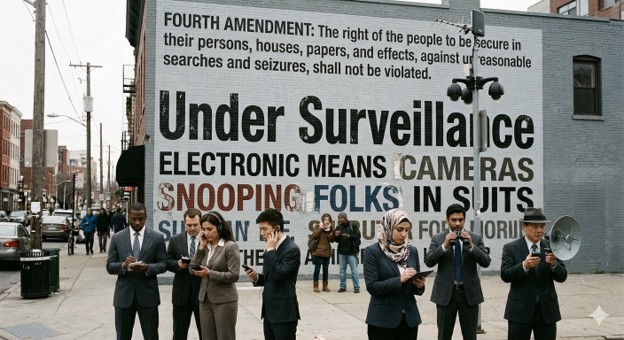
The Foreign Intelligence Surveillance Act (FISA), enacted in 1978, established the legal framework through which the United States conducts foreign intelligence surveillance while attempting to preserve judicial oversight and civil liberties. Over time, it has become one of the most consequential and controversial statutes in U.S. national security law, especially because of Section 702, added in 2008. That provision allows intelligence agencies to collect communications involving non-U.S. persons located abroad with the compelled assistance of American technology and communications providers. Although Section 702 does not authorize the government to target Americans directly, it inevitably sweeps in Americans’ emails, text messages, and calls when they communicate with foreign targets. The central question, therefore, is not whether the government should possess a foreign intelligence tool of this kind, but whether it can be trusted to use it without eroding constitutional protections at home. The strongest position is that Section 702 should be renewed—but only with reforms strong enough to prevent abuse, protect Americans’ privacy, and restore public confidence in the law.
FISA is organized into several titles that authorize different forms of surveillance and evidence gathering under different standards. Titles I and III govern electronic surveillance and physical searches, generally requiring approval from the Foreign Intelligence Surveillance Court (FISC) when the government seeks to monitor suspected foreign agents in the United States. Other provisions, including Title IV, authorize the production of records and tangible items relevant to foreign intelligence and terrorism investigations. Section 702, however, operates differently. Rather than requiring judges to approve individual targets, it allows the FISC to approve general targeting, minimization, and querying procedures on a programmatic basis. That design is precisely why Section 702 has become so valuable to intelligence agencies: it provides the speed, scale, and flexibility needed to track terrorism, cyber operations, espionage, and transnational criminal networks in real time. In practice, defenders argue, allowing the authority to lapse would not represent prudence but self-imposed blindness in the face of persistent foreign threats.
The case for renewal becomes stronger—not weaker—once the real value of intelligence collection is acknowledged. Intelligence gathering has repeatedly helped officials identify foreign networks, detect plots, map cyber threats, and support allied security efforts before violence occurs. FISA is therefore not merely a technical surveillance statute; it is part of the country’s preventive defense architecture. Other democracies have reached similar conclusions. The United Kingdom, for example, has maintained broad overseas surveillance powers under the Investigatory Powers Act while pairing them with layered approval processes and independent oversight. These comparisons do not excuse American overreach, but they do demonstrate that democratic governments facing real threats routinely conclude that foreign intelligence surveillance is necessary. The serious question is not whether Section 702 should exist, but whether Congress will impose safeguards strong enough to make its continued existence legitimate.
At the same time, Section 702’s critics raise a serious constitutional objection. Because the database includes communications incidentally collected from Americans, agencies—especially the FBI—can query that data using an American’s name, email address, or other identifier without first obtaining a traditional warrant. This “backdoor search” problem lies at the center of the controversy. Civil liberties advocates argue that the government should not be allowed to search Americans’ private communications merely because those messages were gathered under a foreign intelligence program aimed at someone else. On this view, Section 702 risks evading the spirit, if not always the letter, of the Fourth Amendment by allowing broad access to domestic communications without individualized judicial approval.
Those concerns are not hypothetical; they are documented. Public reporting and declassified court materials have described FBI queries involving Black Lives Matter protesters, journalists, political commentators, government officials, and roughly 19,000 donors to a congressional campaign. These incidents are not minor compliance errors. They are powerful evidence that, without stricter limits, Section 702 can be turned inward in ways that threaten dissent, privacy, and public trust. A federal court also ruled in 2025 that certain warrantless Section 702 queries violated the Fourth Amendment, underscoring that the government’s safeguards have not always been sufficient. These abuses do not erase Section 702’s intelligence value, but they do make one conclusion unavoidable: renewal without stronger protections would amount to rewarding a surveillance regime that has repeatedly failed to police itself.
That is why renewal with meaningful reform is the only defensible course. Congress reauthorized Section 702 in 2024 through the Reforming Intelligence and Securing America Act (RISAA), but the issue returned in 2026 as lawmakers debated whether stronger safeguards were still necessary. They were. The most important proposals included requiring a warrant before querying Americans’ communications, narrowing the use of Section 702 data in ordinary criminal investigations, tightening the definition of permissible foreign intelligence purposes, and increasing transparency, training, and congressional oversight. These reforms are not an attack on intelligence collection; they are the minimum conditions for preserving it in a constitutional democracy. Analysts also noted that surveillance under existing FISC certifications could continue into 2027 even if the statute temporarily lapsed, which undercut claims that reform would instantly blind intelligence agencies. Congress therefore had both the time and the obligation to legislate carefully rather than renew sweeping powers out of fear.
Ultimately, allowing FISA to lapse entirely would be reckless, but renewing it without stronger safeguards would be irresponsible. The better course is to preserve this intelligence authority while imposing meaningful limits on how Americans’ communications are searched, retained, and used. Security and liberty do not have to be opposing principles if Congress is willing to demand both. A renewed Section 702 should therefore be paired with robust oversight, clearer statutory boundaries, and more credible judicial protections. Only then can FISA remain an effective national security tool without asking the public to accept unchecked surveillance as the price of safety.
If I can say that, as a Dissident in America to the FBI, what excuse does congress have not to do its job. You can read about the saga of Mohamed Ahmed, in America here at www.rpoc.org. The reason why we do politics and hunted because of it is purely political prejudice and outright bigotry of Black, Muslims, Immigrants, Somali and the worst part to the what the FBI has unleashed on us, what I call the “Stasi Alliance Cabal” coming full fledge at us with embargo, censorship and blacklisting among many things coming at us for just being a republican activist. In the age of Trump Derangement Syndrome. Rational thinking and logic of works elude some in group think that they are resistance by being oppressive to us grass roots activists for the republican party in America. Download the free book available on the site above: DISSIDENT IN AMERICA and AVERAGE MOHAMED: FREEDOM FIGHTER for FREE to all, our contribution to FREE PEOPLE POWER. May it live on this planet we pray and work for it too!

Mohamed Ahmed is currently writing his third book coming at you called “Free People Power” to describe how we are forced to live with hardships and destiny denied by bureaucrats playing demigod on us using National Security means to do so gathered under surveillance and currently being outsourced to their coalitions of willing to suppress us in all our efforts and works. Is destiny ours as Free People Power Americans or it officially belongs to bureaucrats and government types in America to decide exclusively using our tax money, name, and authority? We shall all find out soon enough shall we not? We all rented them these powers in our awesome constitutional republic and democracy of we, the people.
We are fully committed to our oaths of citizenship, which proscribes for every American Free People Power, damn be the consequences. Why we seek allies, friends, and partners, for Free People Power to remain as all our rights for all, no exclusion, no exception. If they can do this to us republican activists who says democrats are not next?
We willingly happily take the risk and consequences of it. Join us as we proudly take our freedoms in America at 250 years for posterity of the next 250 years. We pray inshallah, may Free People Power prevail in America. Even if bad, ugly or worse comes our way, you know what to do AMERICANS, these are your rights, freedoms and liberties constitutionally guaranteed to all. Keep it or lose it. Choose wisely Americans.
The greatest freedom we have is our lives protected. The only JOB government types have is to protect it and not infringe on our constitutional rights along the way. FISA LAW protects America from the enemies that seek to destroy it. Even as Dissident in America to the FBI can clearly see it and say give them the powers to keep our loved ones and our neighbors safe and sound. Majority are heroes a few are power hungry tripping ideological demagogues with warlord like powers over we the people among our government types. The good within it is more than the bad within it. Proof is you are reading this article, and hopefully free books, and coming third book inshallah if still alive and free that is if Mohamed Ahmed is still Free and Alive among the greatest nation man put together on earth. America: FREE PEOPLE POWER.
We need congress to do its job of oversight. We need reform, transparency, and accountability. We can as proud Americans and Free People Power chew gum, protect our country from all forms of threats by renewing the FISA law and walk as Free People Power in protecting our fourth constitutional amendments in America. To let FISA law lapse as this congress did is putting all our families into jeopardy. After recess we urge lawmakers to pass the FISA LAW and protect our national security.
We at the Republican People of color, as this author has spent the last 14 years advocating against threats coming from terrorism, domestic or foreign, in narratives peacefully and nonviolently across this globe. To be named even as Citizen Diplomat of the awesome, United States of America twice with awards and distinction. We urge congress please protect America and renew the FISA LAW. Please we peacefully nonviolently petition, don’t play politics with our families lives all of us for the enemies coming at America from theocrats, communist, dictators and non-state actors are coming hard at all of us in America to denature if not outrightly destroy our FREE PEOPLE POWER. They are not lapsing away. Neither should FISA LAW. Reform it and renew it America. Chew gum and walk proudly at the same time America.
Free People Power depends on we the people being safe and secure in it. Renew the FISA LAWS America. Give our protectors and those that are heroes to our republic and democracy the tools they need to do so after reforming it to protect our fourth amendment.
Chew gum and walk America.